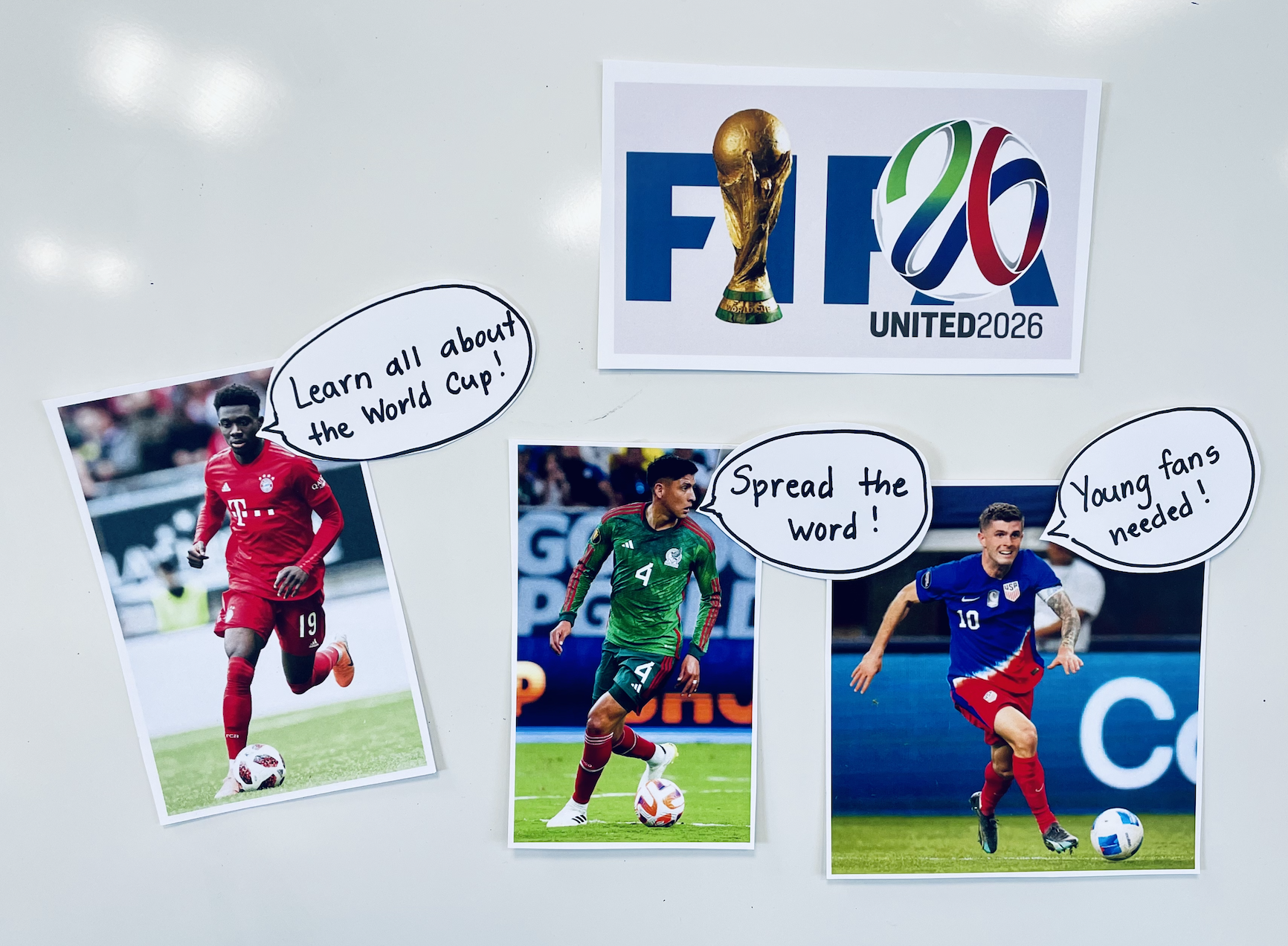
The Storyline begins with images of three World Cup soccer players appearing on the classroom frieze. In speech bubbles they invite students to learn about the World Cup, become soccer fans, and gather more young fans to support the teams.
“Young fans are needed!” Christian Pulisic
“Learn all about the World Cup!” Alphonso Davies
“Spread the word!” Edson Alavarez
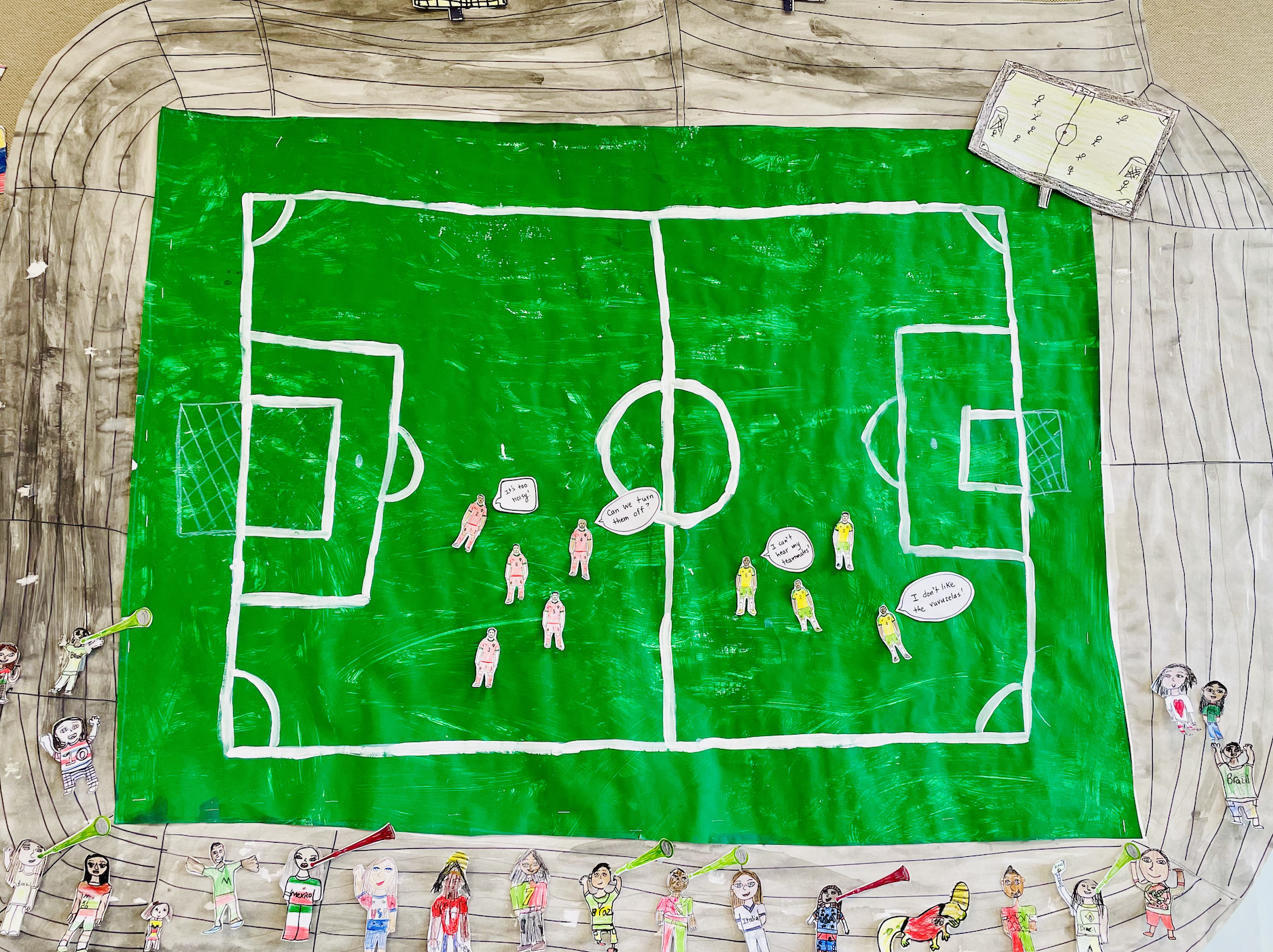
In the process of becoming fans, students learn about the athletes and the countries they represent. Students explore soccer books and videos. They create a soccer field setting on the frieze, fill it with soccer players, study soccer basics, and learn about The World Cup.
The teacher sets up soccer drills for students to perform as they enter or leave class each day.
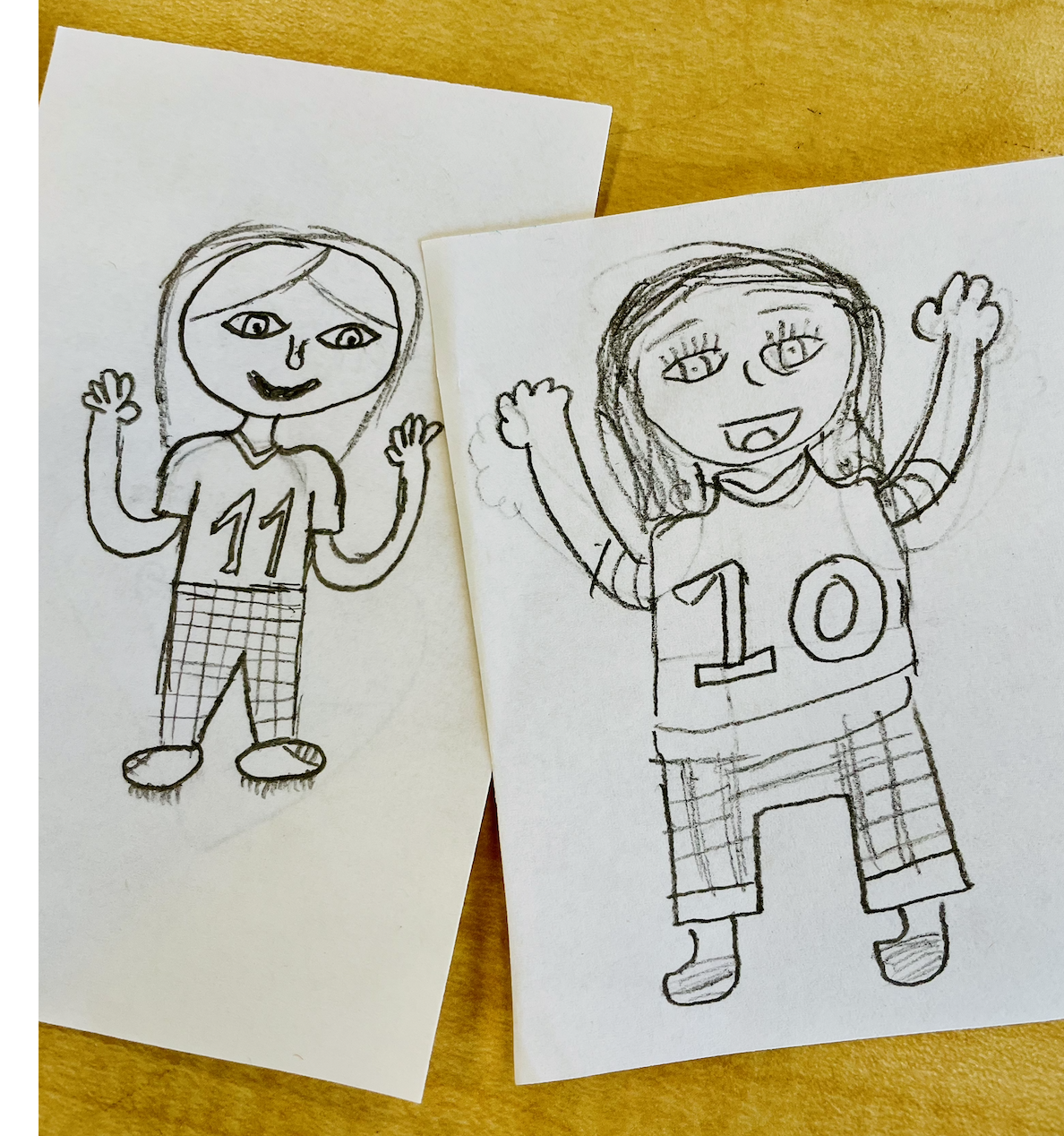
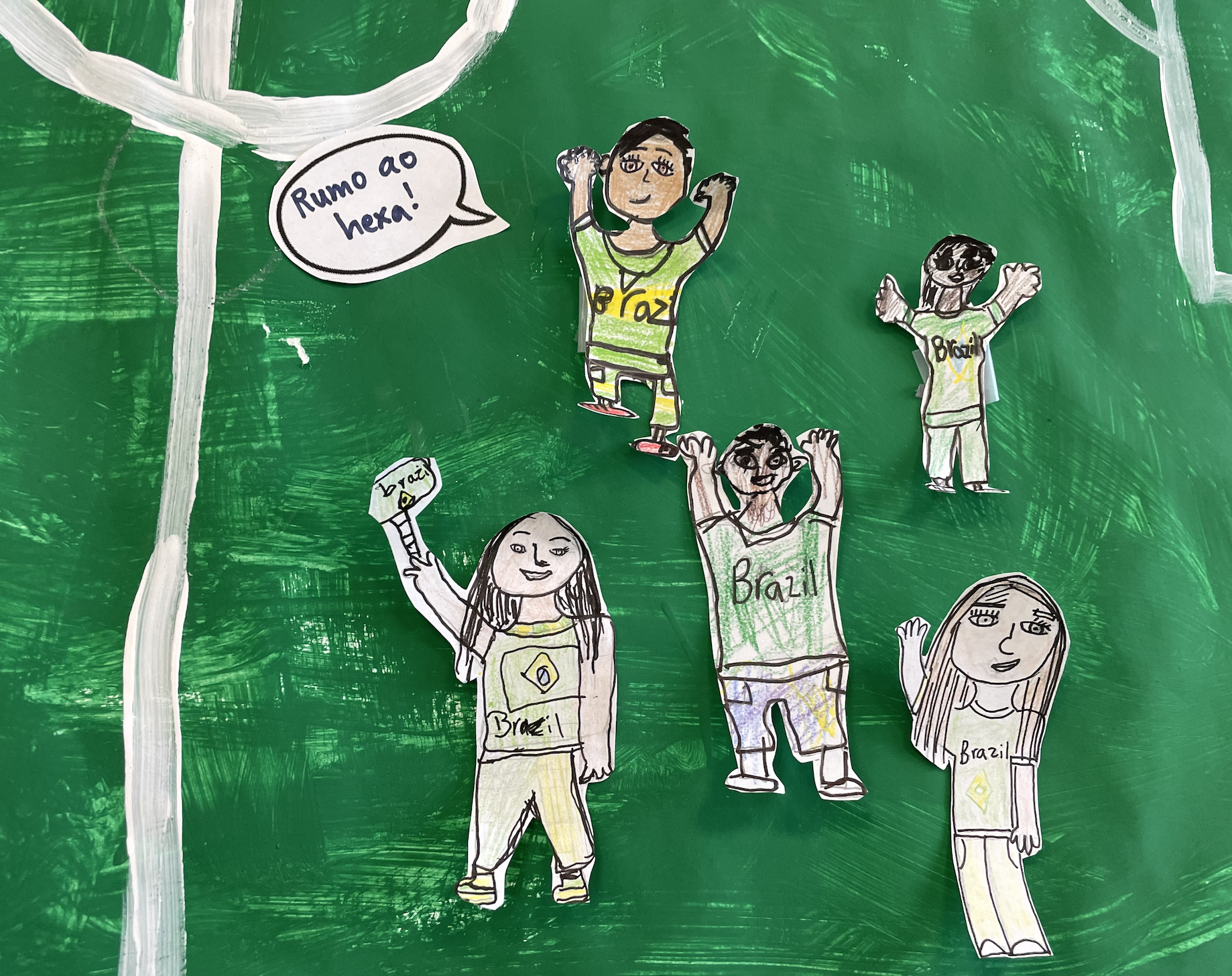
Ready now to become fans, students create fan characters and place them on the frieze. The new soccer fans brainstorm how to be positive supporters of their teams and the opposing teams. They plan cheers, props, dances, etc. for game days.
The teacher, in character as a referee, explains her job to the fans. Teacher and student initiated incidents begin to occur on the soccer field. The referee introduces the incidents and the fans analyze the problems, share their opinions, and predict outcomes.
Soccer fans are invited to a Mini-World Cup Tournament to participate as a player and as a fan.
They discuss good sportsmanship and work to demonstrate it at the tournament.
Soccer fans consider the value and importance of fan support as they design a way to spread the word and encourage other young people to also become fans. They break into groups to share all they have learned about soccer and the World Cup. They share the excitement of soccer with their peers as they work to gather more young fans.
Students reflect on what they have learned and share what being a soccer fan and a soccer player has taught them. They acknowledge the value of sports fans and recognize the importance of sporting events that bring the world together, generating mutual respect and building friendships.
The ten ELP standards are woven into the Storyline and are featured in writing, speaking, process drama, research, vocabulary work, discussions, written claims, problem solving, predicting, etc.
*This Storyline was written by Colleen Vallerga.