
When thinking about feedback, I am reminded of the hours spent writing detailed comments on science labs. In my mind, I pictured students looking at the comments and thoughtfully using the suggestion for improvement. Often I watched students skim the comments, skip to the final grade,and then bury the assignment in their binder. I realized that I was spending more time making comments than the students spent reading them. If students aren’t using the feedback, then what’s the point of it?
“As soon as students get a grade, the learning stops. We may not like it, but the research reviewed shows that this is a relatively stable feature of how the human mind works.”
Dylan Wiliam

The purpose of feedback is to move students from where they are to where they need to be. The research clearly establishes the importance of feedback (John Hattie 0.79 effect size) . When feedback is given and how it is given is critical. As I learned in my own teaching, feedback given after an assignment is turned in rarely produces a change in student learning. For feedback to be effective, think about it as Feed Forward. It should be action oriented, require critical thinking to deepen understanding, and given throughout the learning process. (Video Dylan Wiliam Providing Feedback that Moves Learning Forward 14:57 minutes).
“The only important thing about feedback is what students do with it…”
Dylan wiliam
Importance for Feedback (video 3:00 minutes)
John Hattie’s three questions about feedback
- Feed up: Where am I going? Teacher clarity is critical (Hattie 0.75 effect size). Both the student and teacher need to agree on what is being assessed.
- Feedback: How am I going? Immediate feedback throughout the process guides learning. What is the student doing well? How is it related to the goal of the task?
- Feed Forward: Where to next? Ask open-ended questions that guide the student to the next-level of learning. Self-assessments and reflections is where the learning happens.
Tips for Effective Feedback (video 1:23 minutes)
- Assess Less: Limit the learning goals to one skill or standard at a time and focus on it. Giving fewer, yet higher quality assessments reduces grading time and is easier for students to internalize.
- Grade as they go: Have students submit small sections of a larger assignment. It’s more manageable for both the student and teacher. You can catch misconceptions sooner.
- Record it: Record your feedback verbally in Canvas or with voice-to-text feature for google docs. Remember to edit before you submit.
- Automate comments: Often similar mistakes are made for an assignment. Make a go-to-list of deeper thinking questions and comments that focus students on the task.
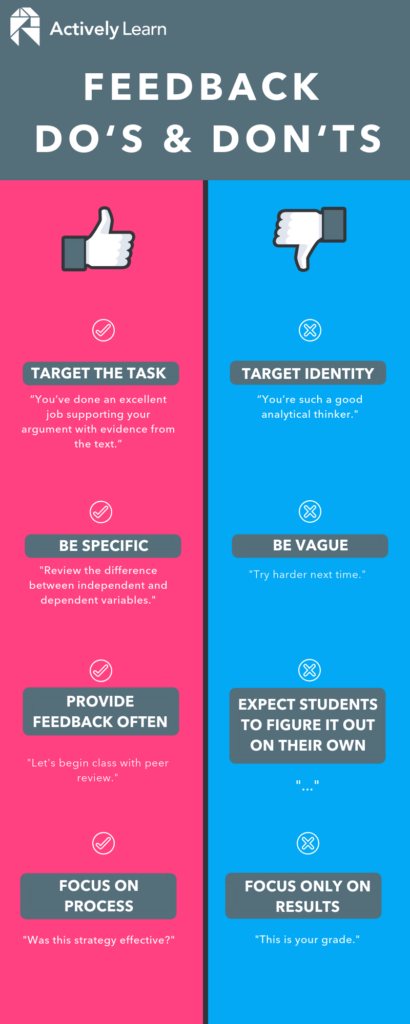
- Feedback Partners: Assign partners for peer assessments. Establish a culture where peer feedback is the norm. Model how to provide feedback emphasizing the task, not the person. Provide sentence stems and practice how to do it.
- Self-Assessment: Include student reflection on learning as part of the assignment. They need to actively reflect on what they learned and how they can apply it to future learning.
- Give Students Choice: If the same skill/standard is assessed multiple times then have the student choose their best work to submit for grading. Include a self-reflection about why they chose it.