Climate Teach-In 2023

Today’s blog is about the Global Climate Teach-In and climate education resources you can incorporate into what you already teach. – By Jackie Mueller, BLS Sustainability Coordinator

The biggest threat to our future is thinking that someone else will solve the climate crisis.

This year COCC and Bend LaPine Schools are partnering to unify our messages through the Worldwide Teach-In on Climate and Justice, a global learning effort launched by Bard University. The Worldwide Teach-in gets people talking about climate and justice solutions. If we don’t talk about Climate Change, we won’t act to stop it. As educators, we can bring climate science to our students.

Students are excited for teachers and community leaders to step up and take action. Students from Bend High School and Caldera High School have formed Our Future clubs and recently participated in public testimony in support of SB 854 Climate Education bill. Many student have formed Green Teams at their schools with the help of teachers that volunteer their time for club meetings and actions.

On Wednesday, April 19th from 1:30 to 5:30, COCC is holding one of only two Climate Teach-ins in the Pacific Northwest. Several BLS teachers and their students are going to the event on the COCC campus. Follow this link for more information about speakers and live streaming.

It you are interested in teaching about climate change this year, check out the google drive of resources and search the resources below. You can also involve your students in DOTs.

DOTs: Do One Thing – Community Action Piece

It’s easy to feel overwhelmed when talking about ways to address climate change, there is not an easy solution, but we can all DO ONE THING. We can all focus on solutions to reduce our individual impact as collective action make a big difference. If everyone committed to one thing, one shift or change, we would start to see the ripples of our actions. It can be as simple as reducing use of single use plastics, reducing meat consumption by one meal a week, biking more, carpooling, recycling, volunteering, or advocating for change. Work with your students to learn more about climate change and discuss individual actions and solutions.

Step 1: Educate about Climate

  • For upper level high school, start a discussion about Project drawdown. This site has 6 units with 15-minute videos and additional discussions.
  • Watch the Our Climate Our Future  a simple but engaging video series for secondary students that explains the climate crisis and provides actionable ideas and opportunities for making a difference. 
  • Review the Lazy Person’s Guide to Saving the World Super easy ways to make change. Choose your level of commitment and take small steps to make an impact.
  • Check out the google drive of Oregon k-12 resources for all grade levels and subject areas.

Step 2: Do One Thing

  • Work in small groups to discuss individual actions that we can choose to take to either reduce our greenhouse gas emissions or something to sequester carbon.
  • Have students write down their one thing. In the past teachers used cut-out construction paper green dots or handprints or leaves. Students can write their one thing on the colored paper.

Step 3: Create Art Installation

  • Send what your students created to Jackie Wilson Mueller, Admin Office. All DOT’s (Do One Thing commitments ). We will create an art installation with the actions. If you find a simple creative way to get students to commit to one thing, will be showcased at the green school showcase and Rubbished renewed eco fashion show on May 20th.
  • If it is easier for you to do this via Jamboard or Padlet, please share results to [email protected] and the students DOT’s will be included.

Climate Science Resources

Searchable Resources

  • Subject to Climate – Free, easy-to-use database that connects educators of all grade levels and subject areas to the resources they need to teach about climate change.
  • OER Commons – Climate Education – Climate education resources for k-12 educators in multiple subject areas. This Hub is designed to be a library of educational resources about climate change and intersectional topics.
  • CLEAN: Climate Literacy and Energy Awareness Network – Easy-to-read  explanations of science and policy, designed to step students through the key principles of climate and energy. Suggested teaching approaches, selected for various grade levels with supporting materials and spanish-language versions of lessons.
  • United Nations – Take Action Now – 10 Impactful actions to tackle the climate crisis. Start with your carbon footprint. Jump into energy saving tips, green travels and food hacks.
  • National Center for Science Education -Supports teachers with tools and skills to overcome misconceptions and misinformation about climate change and evolution

Oregon Climate Policy and Action

  • K-12 Climate Action State Standards Aspen Institute review of states and their level of action
  • Oregon Educators for Climate Education – a statewide group of educators working toward Oregon legislation that would integrate and infuse PK-12 climate change education across all core subject areas. Advancing Climate Change Education in Oregon, GeoFest 2022
  • Senate Bill 854 – Climate Education: Will requires each school district board to develop written plan establishing climate change instructional program for kindergarten through grade 12 no later than June 1, 2026. (In Senate Education committee as April 2023)
  • Climate Change and Youth Mental Health – Oregon Health Authority report, June 2022 As the impact of climate change grows, students are feeling hopelessness, despair, anxiety and frustration about climate change. Students feel dismissed by older generations and angry that not enough is being done to protect their future. They are asking for adults to take action and to provide climate education.
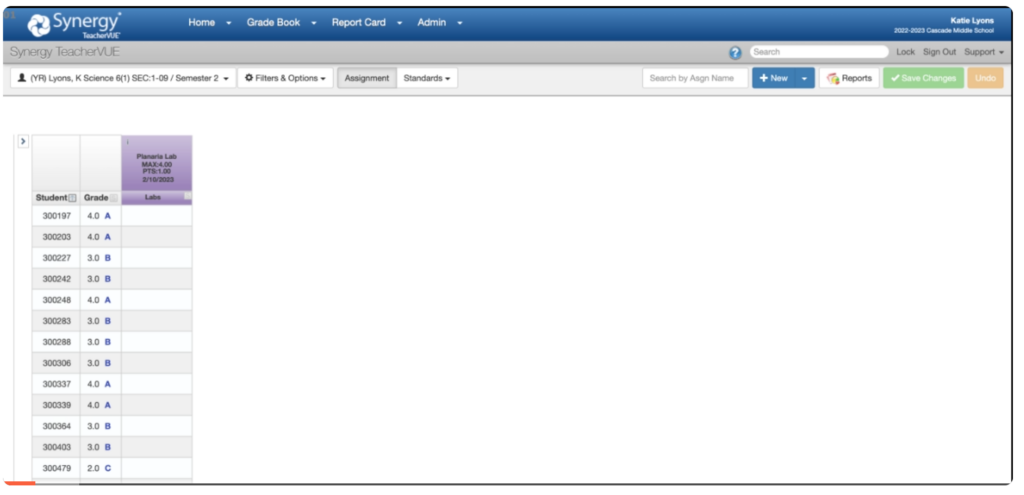
Example of a Standards Grade Book

While collecting feedback on the draft priority standards, we heard requests to see what grading based on standards looks like. A few schools have made the shift. The video below (click on synergy screen shot) from Science Teacher Katie Lyons of Cascade Middle School, demonstrates grading using standards in Synergy. While not a how to, the video gives an overview of it can look to post assignments, assessments and give grades.

Why are the Standards so Broad?

The first draft of priority standards have been constructed by Bend-La Pine teachers. TOSAs are visiting schools to answer questions about the standards, and getting feedback about the team’s work. This in addition to the feedback that Math, Language Arts, Social Science, Science and World Language teachers gave in survey form.

One of the first trends that we have seen is a question about why the standards are broad rather than specific. There are a few reasons for this.

  1. When the standards are broad, it provides more teacher pedagogical flexibility for instruction. When standards are very precise, it can limit the ways that teachers engage with their students in important content.
  2. Broad standards give teachers and students the ability to assess a standard in a variety of ways across the curriculum and across the grading period. 
  3. When standards are broader, they show up in multiple units of instruction. This gives students multiple opportunities to show they are proficient. When standards are too specific, students may only have one opportunity to show their knowledge. Additionally, when a student has multiple opportunities, retakes can be reduced. 
  1. With specific standards, there may be too many standards to cover within a grading period.  We can view the broad standards as umbrellas, with multiple skills under them. By teaching the specific skills, we are also teaching the broader standard. 

Gist Writing – A Quick Way to Have Students Write Summaries

We know that it is important for students to be able to write a summary of important information read in a text. Yet, some students struggle with this skill. Some students cannot find the main ideas and details, other students write so much that the summary turns into a retell with superfluous details included.

The strategy of “Gist Writing” is an evidence-based strategy that can help all students tackle this important skill.  It gets students into reading, writing, thinking, and communicating about summarizing text.

Step 1: Provide a text for students to read.  To begin, a shorter text is best and as the students gain expertise in the skill longer text can be provided.

Step 2: Students identify in a phrase who or what the text is about

Step 3: In 2 or 3 phrases that contain ideas from the text

Step 4: Combine the phrases from step 2 and 3 together into a sentence.

Step 5: Edit or “shrink”the sentence to be between 10 and 15 words.


Example:

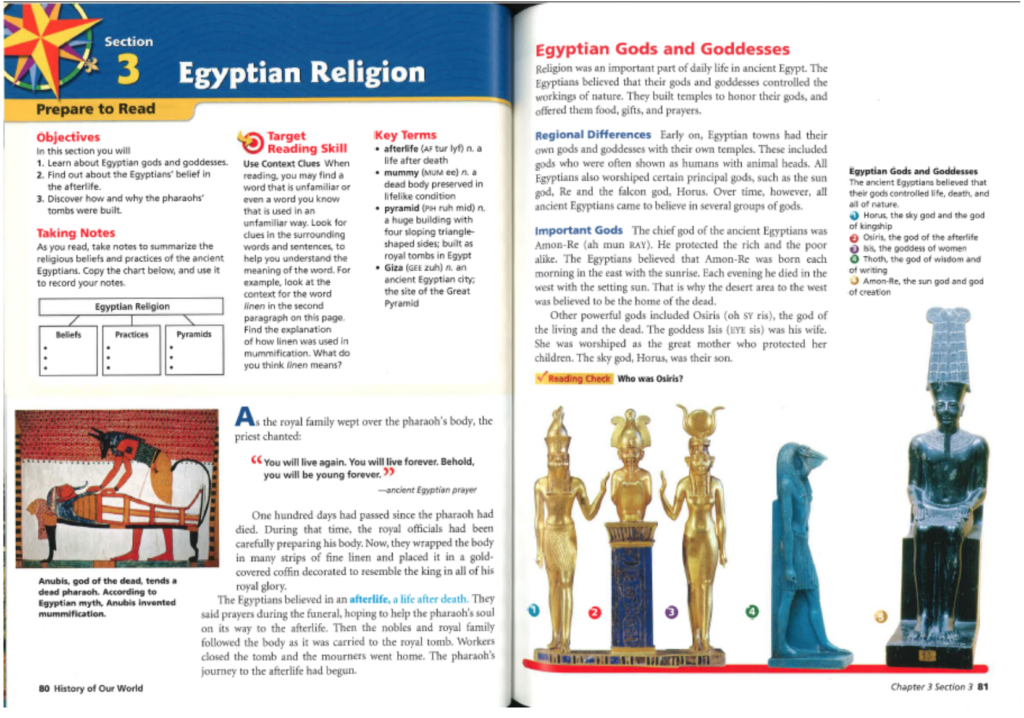
  1. Students read the follow text on Egyptian Gods and Goddesses
  1. Name the who or what the paragraph is about in a brief phrase

Ancient Egyptian Religion

  1. Identify two or three important details about the topic

They believed in an afterlife

People believed in several groups of gods

The main gods were Amon-Re, Osiris, Isis and Horus

  1. Combine the phrases for a create a sentence.

The Ancient Egyptian religion believed in several groups of gods including Amon-Re, Osiris, Isis and Horus that provided the afterlife. (20 words)

  1. “Shrink” the paragraph by stating the main idea

The Ancient Egyptian religion believed in several groups of gods including Amon-Re, Osiris, Isis and Horus that provided the afterlife.

The Ancient Egyptians believed in groups of gods that provided the afterlife. (12 words)

Ready for the next level? Have two students share their gist sentence and combine there to make a new sentence of 10-15 words.


If you would like to add a shout out to a colleague, please do so here.

What can we claim? Ideas for helping students with CERs in Science

Writing a well crafted Claim-Evidence-Reasoning(CER) is a struggle for students at many grade-levels. Often teachers find that students can write a claim and provide evidence but they struggle connecting the reasoning to their claim.   In science, it is not uncommon for a middle schooler to write a conclusion to an experiment citing evidence that seems disconnected and could not possibly support or refute the hypothesis (claim) they investigated.  No wonder the reasoning is difficult.

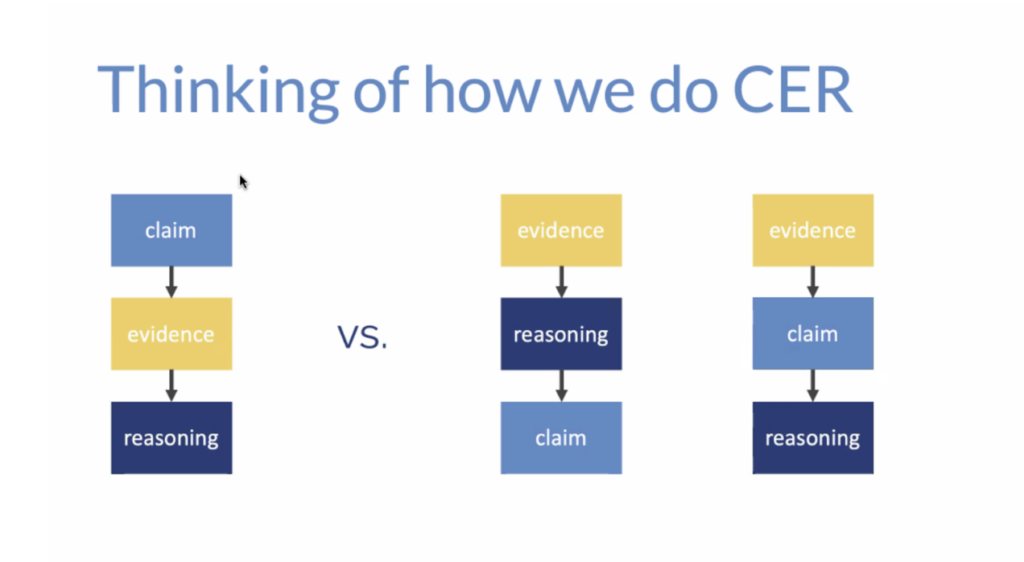
Many science teachers, me included, have asked for help from our language arts colleagues, when it comes to teaching students how to write a cohesive CER.  In Language Arts a CER is written in a format that starts with the claim, followed by evidence from a source and reasons why the evidence supports the claim.  In science, we need evidence before making a claim and explaining the scientific reasons for a phenomenon. Kristin Hunter-Thomson, a former middle school teacher and data literacy expert with Dataspire, suggests a few strategies for helping students write a meaningful CER in science.  

Start with small steps:  Expose students to visual representations often. Before they analyze and interpret their own data they need a lot of practice with a variety of visual representations.  Start with the basics as students analyze and discuss the different types of visualization in groups.  Start with simple questions and about structure and then look for patterns. Gradually the questions and thinking gets more complex.

What kind of visual is used? ( pie, bar, scatter plot, histogram,etc)

What are the parts of the visualization?

What is the overall shape of the visualization?

What is the context of the visualization?

Are there outliers? What does the data show? How does each variable change?

What is the pattern in the data?

What can you infer and why?

Flip it: Start with the evidence before making a claim. Describe the evidence and reason it connects to an important science concept and then make a claim that ties it all together.

What can’t the evidence say: Kristin Hunter-Thomson advocates for teaching students to make inference about what the data can and cannot say.   She points out that students often over-conclude from their data and miss the data limitation.  By teaching students to think about what the data can and cannot say, they begin to see boundaries and make meaning.

Which one doesn’t belong: Kristin Hunter-Thomson gives students evidence of a visual representation and then gives students two claims.  Students must decide which claim the data represents and write a CER for it.  For deeper thinking, explain why the other claim is not supported by the visual representations.

Build it backwards: Valerie Overley at PBMS has her sixth graders start with the reasoning then identify the evidence before making a claim.  Students read and highlight an article while answering questions about renewable and non-renewable energy.  Then students analyze a graph looking at the evidence.  From the evidence and reasoning they write a claim.

Resources


Structured Academic Conversation Protocol

Students getting stuck in classroom academic discussions? Off topic? Uncomfortable? No discussion at all?

If you are looking for ways to revitalize student conversations, stretch what you already do, affirm your practice, or remember an old strategy, this simple structured academic conversation provides supports for students who struggle and space for those who accel.

Large Group Debrief and/or exit ticket:

  • Tell me more…
  • What was one thing you heard that you agreed?
  • What was one thing you heard that you disagreed?
  • Why?

Additional conversation tool for the open discussion: sentence stems (agreeing, disagreeing, clarifying, building)

Prepared pro/con arguments across disciplines: procon.org

Want someone else to try this in your classroom? A second set of hands to navigate the scene. I’d love to give it a go with you and your students…any content area. Worse case scenario, we can laugh at the failures. I’ve had plenty. Email me: [email protected]

If you would like to add a shout out to a colleague, please do so here.

Whose Voice am I Hearing? The Evolution and Revolution of Chatbots

The fodder of science fiction stories has finally arrived in our classrooms – students can use artificial intelligence programs such as ChatbotGPT to craft well-written and even sourced essays that you may find challenging to prove are not their own. Such writing programs will write essays according to any given prompt and length parameters, and are currently FREE for students to use.

At the outset, the three most helpful deterrents appear to be: 1) require students to hand-compose and keep process pieces (ideally, which you review and discuss for the purposes of feedback and goal-setting), so that there is a paper trail and they can easily demonstrate authentic ownership of the work, 2) require students to compose drafts and revisions in Google docs so that you will be able to access a version history that will show you their final draft evolution, and 3) consider providing as much or more grade credit for the process pieces than for the single, final product. All of the above de-incentivize using a ChatBot or – if a student was not deterred ENOUGH – make it more possible for you to trace the genesis of their work.

Also hopeful is Turnitin, which is developing code to detect Chatbot essays as non-human-composed. Equally hopeful (maybe) is an app developed by a college student, and currently free for you to check essays against. (Read more below.)

The days are early though, and this truly is “breaking news” in our classroom worlds. This story – and our best defenses against it – will be changing rapidly in the coming weeks. For now, we want to give you a few links so you can see a curated synthesis of some of the information currently out there about this topic.

The CNBC article “Why tech insiders are so excited about ChatGPT, a chatbot that answers questions and writes essays” takes a deeper dive into the development of chatbots, how they work, what companies have invested in developing their own text-based artificial intelligence tools, and even displays a written response developed by ChatGPT.

Curious how much companies are willing to invest in AI-writing technology? The article, “Microsoft escalates talks with the chatbot threatening Google’s dominance” is a quick read detailing the money and moguls involved in catapulting ChatGPT and other softwares into the limelight.   

Writer and Forbes contributor, Bruce Weinstein Ph.D, writes of the ethical questions raised by the use of artificial intelligence writing tools in: “Which Section Of This Article Was Written By An AI Chatbot?” He puts his own writing to the test when compared to an AI-produced response, and guides readers through some of the moral quandaries posed by the developing technology.

How can ChatGPT hold up in an AP Literature class? In this video, Wall Street Journal’s Joanna Stern, tried her hand at “Cheating with ChatGPT.” (7min)

The Journal discusses Turnitin’s commitment to handle AI detection for us: Is ChatGPT Writing Your Students’ Homework? A New Technology will be able to Detect it (Turnitin is currently available to all BLS high school students.)

NPR’s Monday report discusses the college-student created app, currently free for your use, that will help detect likelihood of AI origination: This 22-Year Old is Trying to Save us From ChatGPT Before it Changes Writing Forever

And, finally, on a lighter note: Summit High principal Michael McDonald requested a TGIF sonnet from Chatbot. Here’s what it generated: The weekend is here! School is done! / For two sweet days, we teachers can relax / For two nights, leaving all homework undone / By pool, book, or Netflix, we can Kick Back / Our afternoons spent with cherished friends / For camaraderie and to share a drink / While most of us just want the weekends’ ends / To muster the strength required, we need to think / And when it’s time to bid goodbye / The fact of school will be remembered fondly / Our opportunity to strive and try / And during the week our work will be seen soundly / The week may just bring challenges and dread / But still we teachers know the weekend is ahead!

Still curious? Here is an upcoming (free) webinar offered by The Write Center, discussing the issue: ChatGPT and the Future of Writing instruction.

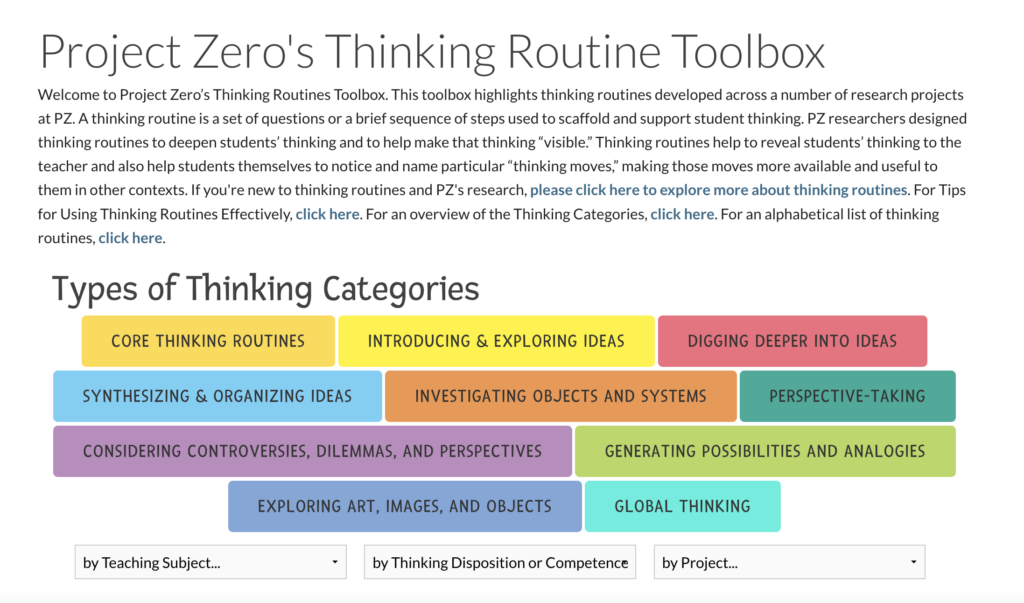
Student Thinking Toolbox

This website by Project Zero of the Harvard Graduate School of Education is full of routines for getting students to think critically about their learning and about the perspectives of others.

Search by subject area and grade level. Dig deeper and find that each routine has lesson strategies. For example, under the blue tab for Synthesizing and Organizing Idea is Portable Surprise with a Resource Link that summarized the routine and suggested ways to use it in an Ecology unit. Click on the image below to go to the website.

The following video talks about routines rather than strategies, meaning try one strategy with lots of practice to make it a routine. The video is 4:36 minutes.

Refection on 2022

As a Secondary Instructional Coaching team, we love working with you and your students. We know how hard each and everyone of you work and we appreciate your dedication to teaching This week’s blog post is a reflection on some of the ideas that have been shared in this post during this school year, many of the ideas that we have learned from you!


from Torie Withers: My favorite blog from 2022 is “Whose Voice are You Hearing in Your Classroom?” because of its timely, and also timeless, message: Every child deserves to be affirmed and acknowledged every day. As educators, our number-one goal is to support our students and create inclusive-learning environments where all children can thrive. This blog post highlights the fact that many of our students may not experience positive-feedback loops in their classrooms, and consequently are not accessing learning or experiencing growth. For me, this post is an essential reminder of the “why” behind how children learn as well as why we as teachers do this work.

from Colleen Behrens: My favorite blog(s) from 2022 is the three part series from Liza Huet; Supporting Multilingual Learners, Stages of Language Acquisition, Strategies that Work – We are often searching for strategies to help our multilingual learners succeed.  Liza’s provides a few gems that reminds us of the importance of creating a sense of belonging with simple acts such as learning students’ names or greeting each student at the door. The blogs also revisit strategies from SIOP and Envoy that many of us already know but may have forgotten during the past few years such as: making learning visual, “I Do,We Do,You Do”, and mixing up the Think-Pair-Share.

from Michele Clements:  My 2022 favorite is “Feedback vs. Feed Forward” – As language arts teachers, exploring ways to best prepare our students for a 21st century context we can not yet imagine, one of our most diligent efforts comes in the effort to teach process over product.  Feedback is an integral part of that because our traditional feedback methods – especially those tied to grades – tend to be product-focused ones.  This is a great blog for nudging our thinking forward, suggesting other feedback options for us, and challenging us to accept the possibility of more effective timing and methodologies.

from Linda Adams: My absolute favorite is the Shout Outs!!! One of Monica’s most fabulous ideas. In addition, I really appreciate what Liza has shared about sporting bilingual students on October 21.

from Monica Freeman:  Teachers are the Best of Bend La Pine.  You make the art of teaching successful for our students. Everyday.

If you would like to add a shout out to a colleague, please do so here.

To Aaron Groenewold (CMS):

Aaron provides a fun, safe classroom where ALL kids feel included and seen. He works magic with some of our hardest-to-reach students, and we’re so lucky to have him at our school Way to go, AAron!

To Madeline Ranstrom (CMS):

Madeline is a fantastic Spanish teacher, but also needs to be recognized for her quick thinking and response in her classroom for a student that was choking and couldn’t breathe. Madeline kept her class calm while administering first aid to the student, and averted what could have been a very awful situation. Way to go, Madeline!

To Deanna Anguilla (TRS):

Deanna helped plan a great assembly recognizing local Veterans on Veterans Day. The entire K-8 student body and many parents showed up and thanked them for their service. Afterwards they had biscuits and gravy, eggs and coffee for breakfast.

To Chris Ruff and Jenny Brown (CHS):

Chris and Jenny collaborate every single day as they work to develop relevant and engaging World Studies curriculum. They support each other through a curricular lens, and they support each other through the challenges of teaching and building a cohesive social studies department. Chris and Jenny set the standard for collaboration. -Chris Boyd

#ConnectionB4Content

“My favorite teachers have been super personal. Real conversations, ask about my weekend. Those teachers make me want to do better. “ Bend-LaPine Student Excellence and Equity 2019 talk session

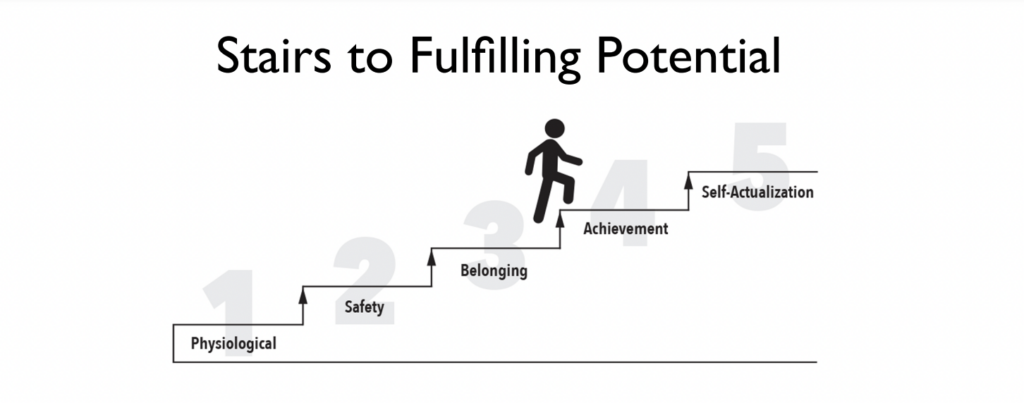
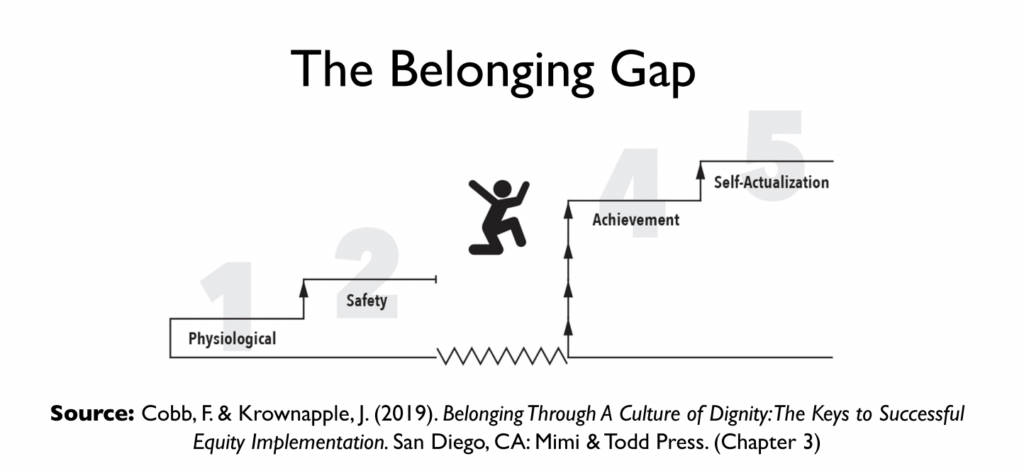
We all know the pressure to meet the standards and to get all the content taught in the school year.  With the pandemic, many of us feel we have to teach more than a year’s content in one year. On top of that, our students are exhibiting outward behaviors that many of us have not seen in our classrooms before. These behaviors stem from a sense of not belonging, hinder the academic performance, and work to increase the learning gaps teachers are trying to close. 

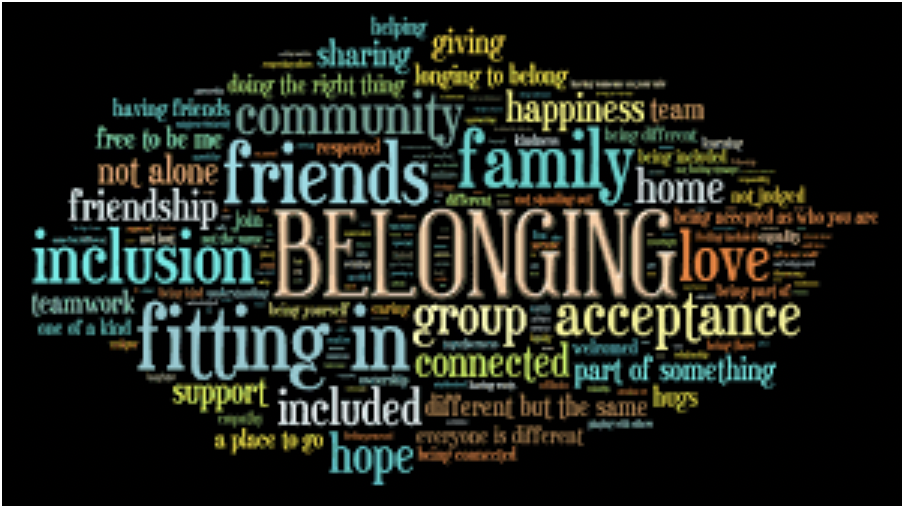
In the book Belonging Through a Culture of Dignity: The Keys to Successful Equity Implementation by Floyd Cobb and John Krownapple, the authors make the case that schools need to focus on creating a culture of belonging before content is delivered. They define belonging as a sense where one feels appreciated, validated, accepted and treated fairly within an environment. When students feel that they belong, they aren’t worried and distracted about being treated as a stereotype… instead they are confident that they are seen as a human being. Belonging is a basic need.

Cobb and Krownapple explain that belonging and dignity go together. They have a cause-and effect relationship in that we build belonging by honoring dignity. When we understand this dynamic, it becomes clear how the concepts of dignity unlocks the potential of the teacher-student relationship, especially across dimensions of difference such as race, gender, class and culture.(Cobb & Krownapple,2019) Students are not ready to learn until they feel connected and a sense of unconditional of belonging.

This Fall, sixty-three teachers and staff across our district participated in a book study with John Krownapple and the book Belonging Through a Culture of Dignity: The Keys to Successful Equity Implementation. The book study, included webinars with John Krownapple, small group discussion and culminating of projects designed to create a sense of belonging among staff and students. Some projected focused creating a culture of belonging among staff. Other projects focused on creating belonging in the classroom.

#ConnectionB4Content is one of the of projects that came out of the book study. You can be part of the #ConnectionsB4Content Project. Visit this link and pick 2 or 3 new strategies you will try. We will check in with you about the strategies you chose and how you feel it affected your classroom culture.  The first 30 people to complete the project will receive a t-shirt.

Book Study starting in January 2023!

Join the Central Oregon Regional Educator Network for Belonging Through a Culture of Dignity: A Book Study beginning January 2023! Participants will learn how to shift mindsets and develop an understanding of what it takes to address educational disparities by creating the conditions that will help all students and staff members thrive. This series is for school-based teams of 3-8 people!  Participants will be compensated with a $700 stipend for their time and engagement and will receive a free copy of Belonging Through a Culture of Dignity by Floyd Cobb and John Krownapple. Please visit this link for more information and to register.

If you would like to add a shout out to a colleague, please do so here.

To Math Teachers at Caldera High School:

The Caldera Math team engaged in their first Math Studio this week. It was a great opportunity for the group to engage in rich conversations about instruction. Extra big thanks to Erin Hoffman for taking the risk to teach a lesson with her peers in attendance.

To Patrick Kilty (SHS):

Pat is always finding ways to bring the outside world to his classroom. He brings outside professionals, lawyers and judges to speak with APGOV class. He works with outside organizations like Classroom Law Project to find opportunities for his students outside of the classroom.  Recently he sent a students to the Gubernatorial Debate that was held in Bend.