

Are you struggling to make the transition to a new way of grading? In Rick Wormeli’s article, “The Grief of Accepting New Ideas” (LINK), Wormeli suggests, “The way we teach is often a statement of who we are.” Wormeli also suggests that the presentation of equitable grading practices implemented in our district may feel like a questioning of our values as we sort and navigate how to reinvent ourselves in an ever-changing world. How do we hold tight to our confidence as educators, while also letting go of practices ingrained in our teaching so we may be open to accepting new ideas? Wormeli suggests that with this change comes vulnerability and grief over the loss of this part of our identity.
Depending on how you are wading your way through the start of the year with standards based grading now on your plate, hopefully you are on the side of hope. Hopefully, you have turned to your collaborative teaching community to seek resources to make this transition a bit more bearable, more productive for you, and more valuable for students. If you are looking for some teaching strategies to help support your transition to standards based grading, please see below for a collection of strategies presented at the Innovation Conference by three teachers from the Equitable Grading leadership team (Katie Lyons, Erin Hoffman, and Nishka Morton)
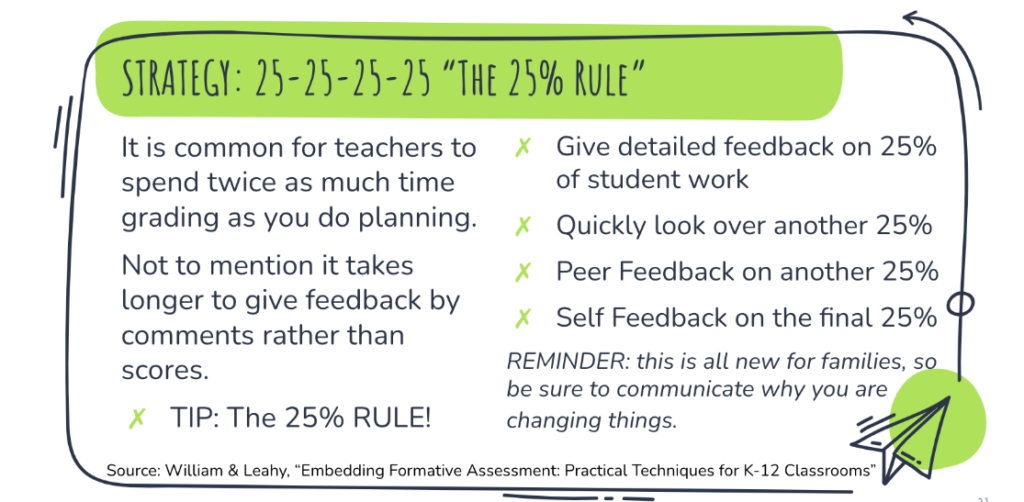
Disperse the Grading
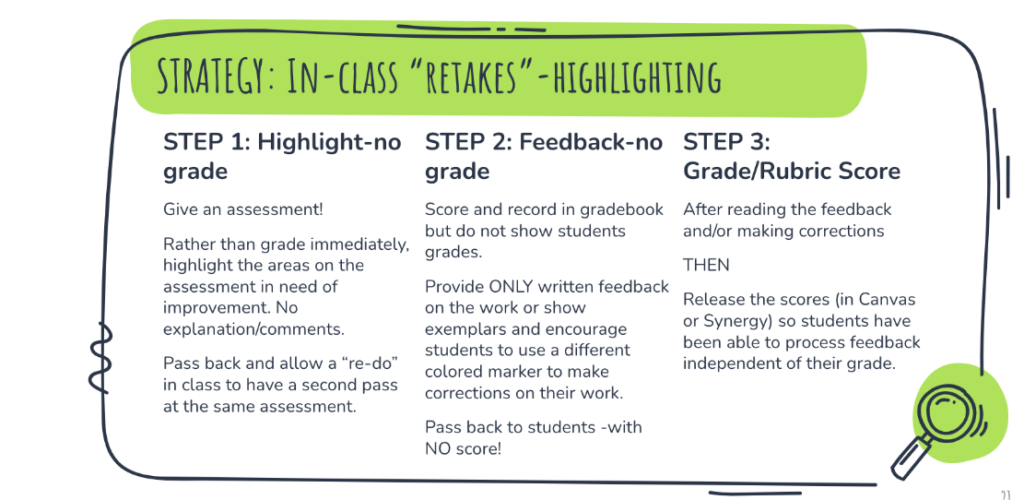
In-class Retakes
Are you struggling to find time for students can retake assessments? Can you utilize class time to allow students multiple attempts on their assessments? Try a highlighting technique for providing feedback on assessments. Here is a video to show how this process works in one classroom: LINK A summary of this process is below
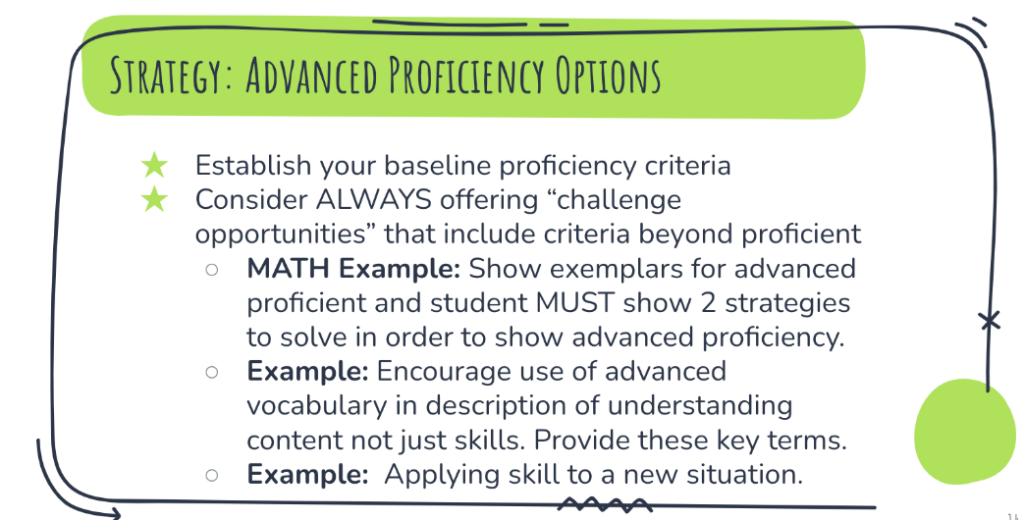
Advanced Proficiency Options
Often equity work is considered from a bottom-up perspective but don’t forget the opportunity to challenge your high achieving learners as you modify your assessments this year. Consider building out extension opportunities on all assessments you create or assign this year. As you transition to rubric scoring, you will be better prepared to evaluate student work when you have developed the top-end of the rubric with your highest achieving students in mind. By challenging them to pursue these extensions at every opportunity you are creating a bar in which they can rise to your clearly-stated expectations. These are great opportunities to have students show true learning through content or development of their skills. See below for a few ideas to consider:
More Tips!
Here are some of Rick Wormeli’s Practical Tips for Re-learning and Re-assessment: LINK. Re-learning may be the most important step in moving student learning forward. Creating a thoughtful plan for re-learning the material and providing student choice for how this re-learning takes place, may in fact allow students to see their mistakes and failures as opportunities to learn.
Last, don’t give up! This work you are doing to transition your grading practice is challenging but important. Student learning and mindsets have great potential to shift and grow. If you need specific help or resources please reach out to your administrator or a member of the equitable grading team for support.