
This is a guest post by Tara Butler, Mathematics teacher at Cascade Middle School and finalist for the Oregon Presidential Award for Excellence in Mathematics and Science Teaching in 2021.
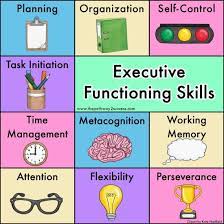
“Executive function is a set of mental skills that include working memory, flexible thinking, and self-control. We use these skills every day to learn, work, and manage daily life. Trouble with executive function can make it hard to focus, follow directions, and handle emotions, among other things.”
Understood.org
In addition to teaching middle school students math, I see my life’s work as the opportunity to develop problem solving, critical thinking, communication, creativity, and collaboration through the vehicle of mathematics. This charge also includes intentionally building Executive Function skills. We want to prepare students not just for our subject area but for every facet of their lives.
I’ve thought about the vitality to bring awareness to and to develop Executive Function skills in students, especially with the challenges the last year and a half has thrown their way. I came across this article in Edutopia by Sarah Kesty, “Supporting Executive Function Skills by Asking Questions.” I was inspired to deliver research based practices for my students to apply rather than my good faith efforts that weren’t giving each student what they deserve.
Following is a summary of what I uncovered:
- Ask genuine questions rather than giving directives.
We don’t want students guessing what they are to be doing but if directions have been given and/or the expectations have been made clear, we can ask a question to jog their memory about their next best step. This relays high expectations and shows students we believe in their ability to solve problems and be self-sufficient.
- Coach students to be their own coach.
For example, in solving a challenging math problem they can ask themselves:
It can seem easy or time saving in the moment to answer a student’s question or tell them how to do something rather than the long game of teaching them to turn to themselves first as a resource.
- How is this structure similar to a simpler problem?
- How can I draw this visually?
- How can I look at this problem another way?
- I will give myself time to think about this problem before asking for help.
- Equip students with a set of general questions they can utilize in any situation*
- What do you notice?
- What parts do you understand?
- What do you think you might need right now?
- How can you tell?
- Where could you look for that information?
- How will you remember to use that strategy or take that action?
When we’re tired, overwhelmed, or stuck; what an honor for us to step back, put the content on the back burner for a moment, and remember that we play a critical role in shaping human lives.