
Tribal History/Shared History

Tribal history shared history

In 2017 SB13, Tribal History, Shared History was adopted into law.  This act brings the Native Oregonian history and experience, through the lens of the nine federally recognized tribes, into the forefront of Oregon Schools.  

The Department of Education has created a website that has lesson plans across several disciplines including Language Arts, Math, Social Studies, Science and Health in 8th grade and 10th grade

ODE has also created a series of Essential Understandings of Native Americans In Oregon  for Teachers to understand the experiences of Native People.  Much of this history was not taught in our schools prior to SB13.

The following are several resources that can be used to learn and teach more about those who have lived here since time immemorial.


Abby Hall, former student teacher at Bend High, created these videos about the Klamath Tribes, of which she is a member

Truth, Reconning, and Healing, the Klamath Tribes

This is an 8-minute video on the boarding school experience.  There will also be corresponding curriculum written for 11th grade students that can be found at the Klamath Tribes website as well as Oregon Department of Education website. 

We’re Still Here, The Termination and Restoration of the Klamath Tribes 

This is a 5-minute video on the Termination and Restoration of the Klamath Tribes.  There will also be corresponding curriculum written for 6th grade students that can be found at the Klamath Tribes website as well as Oregon Department of Education website.

Heal the Land, Heal the People 

This is a 5-minute video on the importance and cultural connections to the land. 


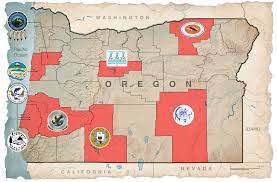
Learn more about specific tribes by visiting the websites of the 9 federally recognized tribes in Oregon

Tribal Websites


OPB did a great show on the native people of Oregon on the show Oregon Experience, Broken Treaties, An Oregon Experience.  It is an almost an hour long and rated G. Here is the summary:

Hundreds of books exist about the Lewis and Clark expedition and the decades of pioneers who followed them West.  But even today, most Oregonians don’t know much about the people who had settled here centuries before “the settlers” came.  “Broken Treaties” introduces viewers to the tribes of our state and explores a thread of the Oregon story that hasn’t been told very well over the years.   

Teaching about Tribal History is not just a Social Studies thing! Here is a link about teaching STEM with Indigenous People in mind.

Teaching STEM In Ways that Respect and Build Upon Indigenous Peoples’ Rights


When thinking about the important pieces of our shared history, Leilani Sabzalian (Assistant Professor, Indigenous Studies in Education, University of Oregon) shares about the 6 P’s to keep in mind here.
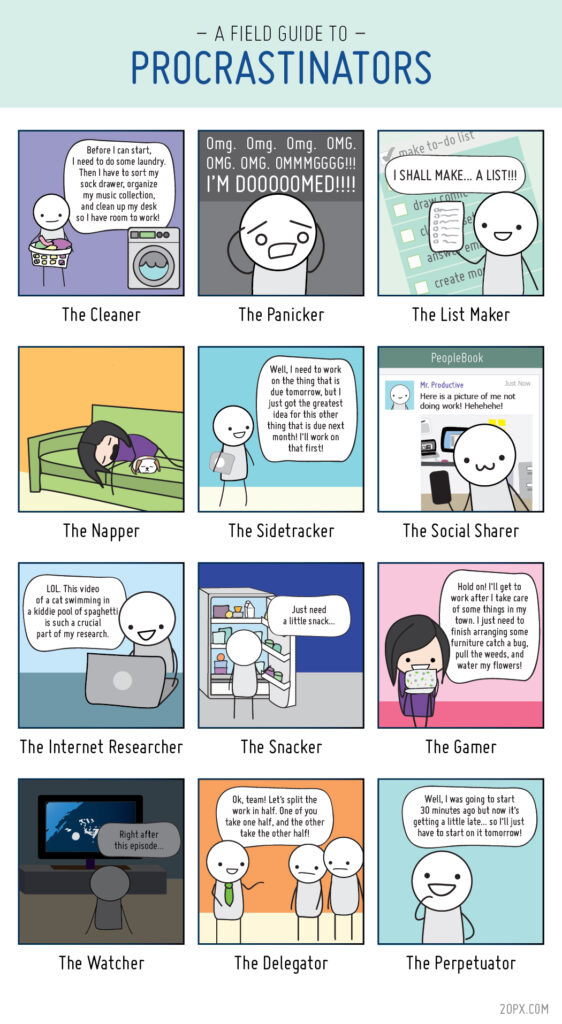
The Procrastinator – Lazy or Stuck?

Procrastinating students are often misunderstood as being lazy or unmotivated. There’s more to it than that. Reflect on your own procrastination. Why do you do it? How does it make you feel? Does it lead to stress and guilt? Can you refocus and get the work done? Upon self-reflection you probably find that procrastination usually means you are stuck. Procrastination can lead to a myriad of emotions; regret, self-doubt, guilt, excitement, anxiety. Research suggest that students often are stuck for one of two reasons; fear of failure or confusion about the task.

It’s a common perception that students who procrastinate do so because they don’t care about the assignment – and that’s usually wrong.

Devon Price – Social Psychology Professor

Watch the video below about the types of procrastinators. Do you recognize yourself? Do you recognize some of your students? Think about the motivation behind each procrastinator and how that impacts their self-esteem and work production.

4 Types of Procrastinators by Michael Greschler

  • The Perfectionist/Overdoer: Everything has to be just right. It’s impossible to prioritize and work effectively.
  • The Defier: Resents authority and the loss of autonomy. Procrastinates to prove independence.
  • The Dreamer: Loves the big picture, gets lost in the details. Procrastination is a way to stay in the beautiful details and not ruin them by doing the work.
  • The Crisis Maker: Lives on the edge and does everything at the last second. Motivated by what’s immediate.

Watch this video on types of procrastination (5:54 minutes)

3 Reasons Students Procrastinate and How to Help them to Stop by Youki Terada. This article suggests 6 ways to help students NOT procrastinate:

  • Have clear instructions and examples: Students that are confused don’t know how to start. Teacher clarity matters greatly (0.75 effect size). Give clear expectations and requirements in writing and provide exemplars.
  • Spread out deadlines: Breaking down the assignments into mini-deadlines rather than one final deadline helps students prioritize.
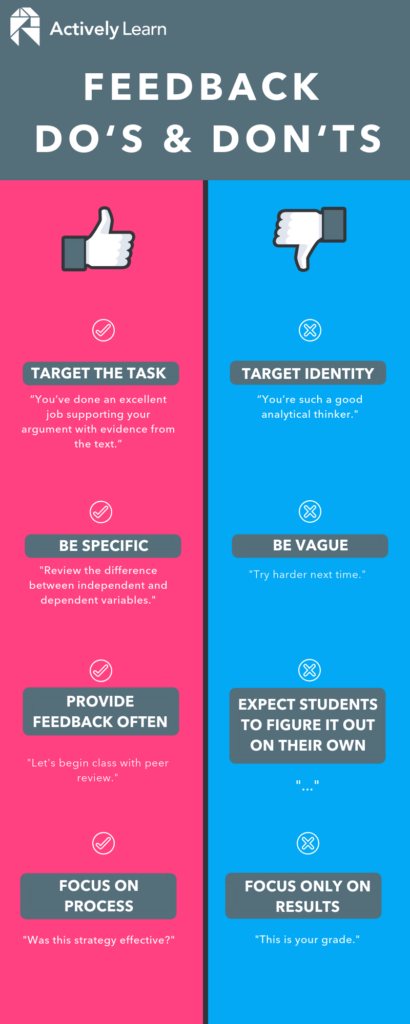
  • Provide supportive feedback: Students with low-self esteem or are self-conscious shut down with criticism or fear of failing. Provide supportive feedback about their task and process. (See previous Blog post on Feedback)
  • Model and practice study skills: Many student don’t know how to study and lack metacognitive skills. If they don’t recognize what they don’t know then they are lost. Don’t assume students learned study skills already or that they should know how to study. They need a variety of strategies in order to find the ones that work for them.
  • Explicitly teach time management: Teach students how to plan backwards from a due date. Practice scheduling a day and a week and then self-reflect on how well they estimated the time allotted for each task.
  • Be mindful of workload: There are predictable times when workloads are heavy (before breaks or the end of a grading period). Be mindful of the stress caused by the amount of work students are expected to juggle.

Just a little more…

Worth the Watch! Inside the Mind of a Procrastinator (14 minutes)

Types of Feedback that Moves Learning Forward

By Dean Richards

Last week’s blog focused on feedback and moving students forward in their learning. This week we look at John Hattie’s levels of Feedback.

Types of Feedback

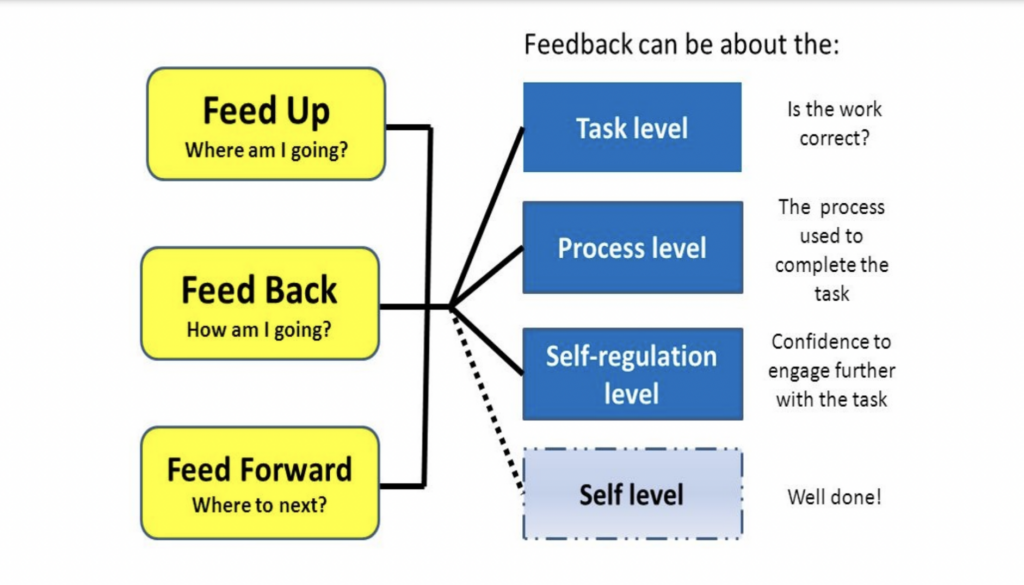
The content of the effective feedback that we provide students falls into 3 helpful categories.  

  • Feedback about the task
  • Feedback about the process
  • Feedback about the thinking during the task

“For the teacher, the art is knowing when to add in/move to the next level of feedback.”

Visible Learning

Task Level

Feedback about the task may be the most common and easiest feedback to provide to students.  This includes information about the errors that a student produces in the task. A teacher may also give feedback about the quality of the work. A rubric is a great way to provide that explicit feedback. The drawback of providing feedback only on the task is that the misconception(s) that are evident may be transferred to the student’s next task, thus the misconception continues.

Examples of prompts at the task level:
• Did you meet the success criteria?
• Is your correct/incorrect?
• How can you elaborate on the answer?
• What did you do well?
• Where did you go wrong?
• What other information is needed to meet the criteria?

Process Level

Some students, particularly those who are often the most successful in schools, will be able to transfer the feedback from the task to the process.  Providing feedback on the process, the steps taken to reach the final product, is a powerful way to move students to generalization.  Providing feedback on the quality of the process and giving alternative actions can be more powerful for students’ next task than feedback on the task alone.

Examples of prompts at the process level:
• What is wrong and why?
• What strategies did you use?
• What is the explanation for the correct answer?
• What other questions can you ask about the task?
• What are the relationships with other parts of the task?

Thinking/Self-regulation Level

The next powerful feedback, and possibly the most difficult, is to provide feedback on the thinking that occurred while the student engaged in the task. This helps students monitor their thinking and learning process. This is most commonly done in conversations with students. One of my favorite moves I used while tutoring students for the SAT was to say, “You got that right.  What were you thinking about when you did that?” Students often looked at me strangely, as they were not used to explaining their thinking.  Often they talked about their process, then I would ask about how they thought.  I would ask about their level of confidence. Forcing a student to metacognate about the task and process increases their self-efficacy.

Examples of prompts at the self-regulation level:
• How did you monitor your own work?
• What did you do to …?
• How can you account for …?
• What justification can be given for …?
• What further doubts do you have about?
• How does this compare with …?
• How have your ideas changed?
• Can you now teach another student how to …?

Diving in…

Feedback vs Feed Forward

When thinking about feedback, I am reminded of the hours spent writing detailed comments on science labs. In my mind, I pictured students looking at the comments and thoughtfully using the suggestion for improvement.  Often I watched students skim the comments, skip to the final grade,and then bury the assignment in their binder. I realized that I was spending more time making comments than the students spent reading them.  If students aren’t using the feedback, then what’s the point of it?  

“As soon as students get a grade, the learning stops. We may not like it, but the research reviewed shows that this is a relatively stable feature of how the human mind works.”

Dylan Wiliam

The purpose of feedback is to move students from where they are to where they need to be.  The research clearly establishes the importance of feedback (John Hattie 0.79 effect size) . When feedback is given and how it is given is critical.  As I learned in my own teaching, feedback given after an assignment is turned in rarely produces a change in student learning. For feedback to be effective, think about it as Feed Forward. It should be action oriented, require critical thinking to deepen understanding, and given throughout the learning process. (Video Dylan Wiliam Providing Feedback that Moves Learning Forward 14:57 minutes).

“The only important thing about feedback is what students do with it…”

Dylan wiliam

Importance for Feedback (video 3:00 minutes)

John Hattie’s three questions about feedback

  1. Feed up: Where am I going? Teacher clarity is critical (Hattie 0.75 effect size). Both the student and teacher need to agree on what is being assessed.
  2. Feedback: How am I going? Immediate feedback throughout the process guides learning. What is the student doing well? How is it related to the goal of the task?
  3. Feed Forward: Where to next? Ask open-ended questions that guide the student to the next-level of learning. Self-assessments and reflections is where the learning happens.

Tips for Effective Feedback (video 1:23 minutes)

  • Assess Less: Limit the learning goals to one skill or standard at a time and focus on it. Giving fewer, yet higher quality assessments reduces grading time and is easier for students to internalize.
  • Grade as they go: Have students submit small sections of a larger assignment. It’s more manageable for both the student and teacher. You can catch misconceptions sooner.
  • Record it: Record your feedback verbally in Canvas or with voice-to-text feature for google docs. Remember to edit before you submit.
  • Automate comments: Often similar mistakes are made for an assignment. Make a go-to-list of deeper thinking questions and comments that focus students on the task.
  • Feedback Partners: Assign partners for peer assessments. Establish a culture where peer feedback is the norm. Model how to provide feedback emphasizing the task, not the person. Provide sentence stems and practice how to do it.
  • Self-Assessment: Include student reflection on learning as part of the assignment. They need to actively reflect on what they learned and how they can apply it to future learning.
  • Give Students Choice: If the same skill/standard is assessed multiple times then have the student choose their best work to submit for grading. Include a self-reflection about why they chose it.

If you’re still hungry for more…