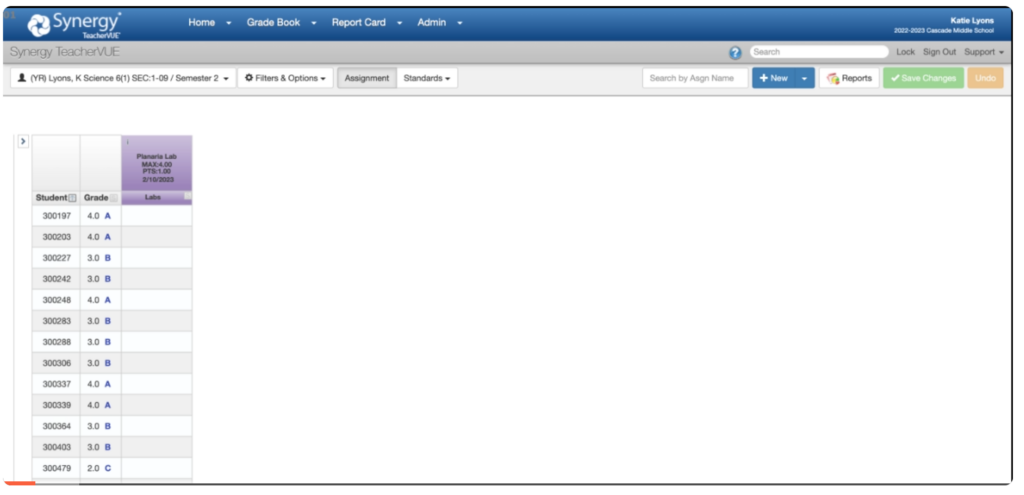
While collecting feedback on the draft priority standards, we heard requests to see what grading based on standards looks like. A few schools have made the shift. The video below (click on synergy screen shot) from Science Teacher Katie Lyons of Cascade Middle School, demonstrates grading using standards in Synergy. While not a how to, the video gives an overview of it can look to post assignments, assessments and give grades.
The first draft of priority standards have been constructed by Bend-La Pine teachers. TOSAs are visiting schools to answer questions about the standards, and getting feedback about the team’s work. This in addition to the feedback that Math, Language Arts, Social Science, Science and World Language teachers gave in survey form.
One of the first trends that we have seen is a question about why the standards are broad rather than specific. There are a few reasons for this.
When the standards are broad, it provides more teacher pedagogical flexibility for instruction. When standards are very precise, it can limit the ways that teachers engage with their students in important content.
Broad standards give teachers and students the ability to assess a standard in a variety of ways across the curriculum and across the grading period.
When standards are broader, they show up in multiple units of instruction. This gives students multiple opportunities to show they are proficient. When standards are too specific, students may only have one opportunity to show their knowledge. Additionally, when a student has multiple opportunities, retakes can be reduced.
With specific standards, there may be too many standards to cover within a grading period. We can view the broad standards as umbrellas, with multiple skills under them. By teaching the specific skills, we are also teaching the broader standard.