
The weight of the past two years feels heavy on our shoulders. Teachers are reporting that students are lacking skills in social-emotional areas and academic skills. Many teachers are asking, “How do we support our students and the gaps in learning we are seeing with them right now?”
Taking a “we are all in this together” approach, it seems imperative that we, as a school community of educators, tackle what we’re seeing in our students head on, and collaboratively.
In the 2019 book Disciplinary Literacy Inquiry & Instruction by Jacy Ippolito, Christina L. Dobbs, and Megin Charner-Laird, the case for teaching literacy across disciplines is strongly made. All teachers should view themselves as playing significant roles in developing a student’s literacy.
One way teachers can support students is by pointing out ways in which texts look very different in each class. The text that students engage with in Language Arts looks very different from text in a Career and Technical Education course. The lens that a reader must take for a Social Studies text, which is filled with bias, is different from many texts in a Science course.
AdLit: All About Student Literacy has a website has a slew of amazing, simple, & ready-to-implement-today reading strategies that all teachers can use in their next lessons. The strategies emphasized are: Comprehension, Vocabulary, and Writing. What I like most about the way the website organizes these are in when you would implement these strategies in the reading process: BEFORE reading, DURING reading, and AFTER reading. I want to highlight a favorite from each stage of the reading process. If you’re intrigued, the website is easy to navigate and will offer many more!
Before Reading – Concept Sorts
One of my favorite reading strategies is Concept Sorts — using this technique, you can develop some prior knowledge and connections you want kids to make on their own. As an added bonus, the format is simple and will reach all students.
(Concept Sorting is a way of engaging students in Hexagonal Thinking, which has become a new rage in education – If you’d like to learn more about it, I’ll link an interesting blog post from The Cult of Pedagogy.)
During Reading – Concept Maps & Highlighting
The first one you might want to consider trying while students are reading is a Concept Map (I like to call them Brain Webs) — it’s low-stake writing and thinking, perfect for students with skills that are limited. The limited amount of writing and focus on single words and phrases helps students organize their thoughts quickly.
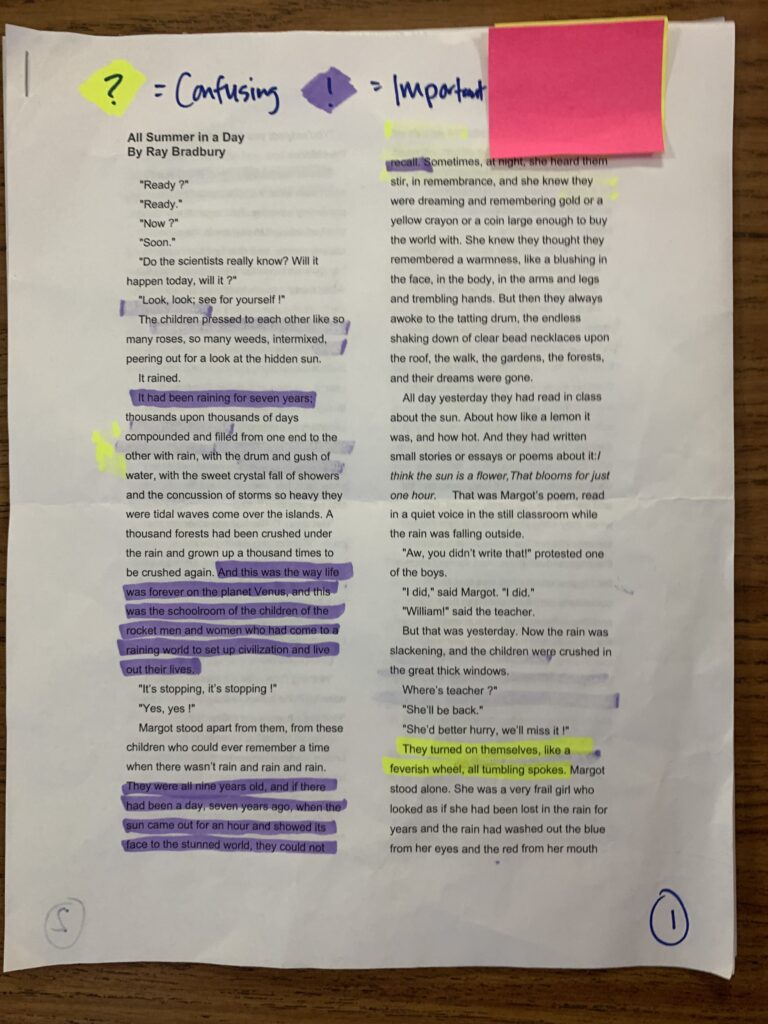
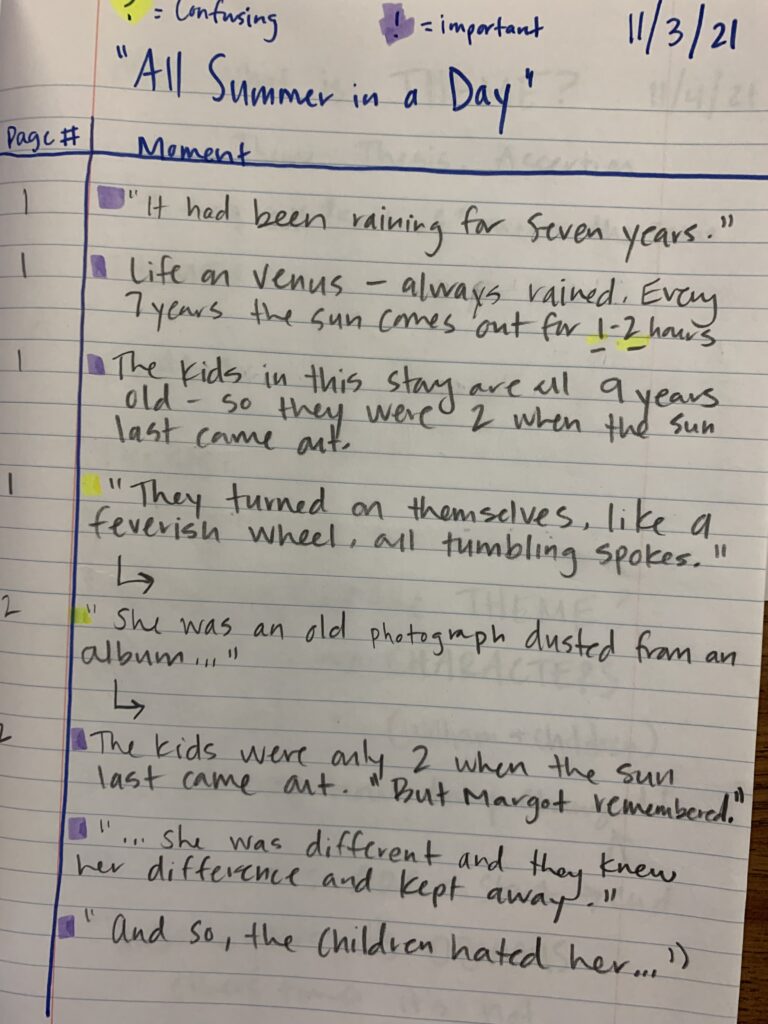
Another strategy I love and slightly adapted from the website version is Two Highlighters: Important and Confusing – I love telling my students, “It’s a sign of intelligence to be able to admit what you don’t know or understand.” The idea is in one color, they highlight words and moments that they don’t understand. The other color is for those moments that make us think, “Wow, this seems really important. I may not know why exactly yet, but I want to remember to look back at this later.” When I model this in front of them, chart it on a simple table in my reader’s notebook, and show them how to resolve simple issues that may be tripping them up, it increases reading comprehension by so much. It forces students to go back and re-read, to think deeply, and shows them a strategy they can use in any class, with any text. Once students have these moments organized, teachers can help strategize ways to resolve the difficult moments. If it’s vocabulary, would defining it help? Finding a synonym to replace the difficult vocabulary term? Is it a context issue?
After Reading – Summarizing
Summarizing is a tough skill for students, but we know it helps build comprehension. Generally, we see students write too much or pull out less-important information. Using this strategy, teachers can hone in prior knowledge and help build vocabulary. One way you could guide students into a more-targeted approach is the
How to implement this right away: Begin by reading OR have students listen to the text selection.
- Ask students to write a summary of the target text based on the following framework questions:
- What are the main ideas?
- What are the crucial details necessary for supporting the ideas?
- What information is irrelevant or unnecessary?
- Guide students throughout the summary writing process. Have them use keywords or phrases to identify the main points from the text.
- Encourage students to write successively shorter summaries, constantly refining their written piece until only the most essential and relevant information remains. I like the “Summarizing 5-3-1” method. Give students a task to summarize a passage or text in five sentences. Then practice with three sentences. And finally, challenge students to write a one-sentence summary. They will improve on identifying the most important details quickly with this strategy.
Questions about these strategies? Reach out to [email protected]