Welcome to the first Secondary Instruction Blog of the 21-22 school year!
The best thing about this year is that we get to start the year with student’s faces (at least the top half of them!) We all are working hard to stay safe, maintain our distance, wash hands and teach at the same time. It is quite a task – and one many of us never, ever expected.
Technology is continuing to play a crucial role in the education of our students. Two daily platforms that you are interfacing with are Synergy and Canvas. We wanted to start out this year with a quick blog post to remind you of the supports the Instructional Technology team has put together.
Synergy
Many of you have been using Synergy for years and feel really comfortable with it. New teachers just getting started in our district should know about “Synergy for Teachers”. This website is your one-stop-shop for gaining knowledge about the grade book tools available within Synergy. At the top of the site, you will see links to specific resources for grade book, Teacher Vue, report cards, and commonly used reports. Synergy For Teachers is just one of the many resources that can be found in the Tech101 resource found in our staff portal. Or, better yet, bookmark this link right now!
Canvas
Canvas continues to be the required student learning platform. Resources for students, including all assignments should be posted here. This is especially important right now as students are quarantining and need access to relevant resources and to know what assignments are due. As most of us know from last year, the best way to understand Canvas is to use it. To support you, the Instructional Technology Team has created a one-stop shop for Canvas Training and Resources. Your schools also have Canvas First Responders who can provide you with additional support and answer questions.
Can you tell us about one of the teachers in your life that had the greatest impact on you as a student?
The teacher when I was young was my English teacher Mrs. Hodge – she was my teacher in 8th grade. She was the first teacher ever in the history of the district to do book clubs. It was so radical! No one had ever done anything like that! In my district, as early as the third grade, we all read Charlotte’s Web and then we all read Little House on the Prairie or something like that. The fact this woman came in and said, “Would you be interested in choosing your own books to read? We didn’t even know what to say! “Yeah. I guess.” It was such a beautiful thing.
And she also did something that was incredibly radical at the time, which is she let us choose who we wanted to read with. Which was such a relief because I was in middle school and I was terrified of half the kids in my class. Half of them I really adored, but half I was terrified of, so the idea that she would let me choose what I wanted to read AND who I wanted to read with was just so terribly revolutionary.
And that was part of the reason I fell in love with her – because of course you fall in love with your teachers – and then I fell in love with English, and then I fell in love with teaching.
Why did you decide to dedicate your life to education?
Unlike some of you who chose your careers really early, I did not do that when I was young.
I was actually finishing a doctorate in art history, and working at the Metropolitan Museum and teaching in a very privileged school. It was such a privileged existence – I walked across Central Park to go to school; I spent most of my days with kids and in the museum looking at beautiful things. One day, I just happened to be invited to a salon with Maxine Greene, and you might not know her but she has an amazing book called The Dialectic of Freedom. She was the first woman philosopher at any Ivy League University, and she was this amazing woman. She was in her 80’s and she ran the Lincoln Center for Education and somehow, by the end of the salon, she invited me to take the next day off from school.
She picked me up in the Lincoln Towncar and she took me to two schools in the Bronx – one was Riverdale Country Day which was like the school I was teaching at – a very elite, privileged, independent school. And the other was a high school less than half a mile away that had something like 261 kids in its freshman class, and it graduated 13 of them. It had bathrooms that were always locked or doors that were always left open so kids had no privacy. There were metal detectors. There was not a book in the school that kids could read. Maxine finished the day with me and then she literally said, “Mary, I think you need to do something more meaningful with your life.”
I went home that night and dropped out of my doctor program and re-enrolled in Education and Curriculum Theory at Columbia. And that was it. I decided that I wanted to work inside education.
Can you tell us about 1 or 2 of your biggest ah-ha moments around inequity in education? When and where did that awareness begin for you?
That episode with Maxine Green was one of them. I was in my late 20’s – it’s amazing the things you just don’t know, or are blind to…some of us live these lives of privilege and I did not know that NYC has some of the most segregated schools in the country despite Brown vs. Board of Education. That day with Maxine was one of the most eye-opening days for me.
For a second moment, fast forward five years later and I’m in Washington D.C. and I’m with a whole group of principals. We’d been touring schools together trying to figure out how to give feedback to teachers. And there’s this boy whose desk is off in a corner, by the side of the room. I ask why he is separated from the rest and I expect to hear that he has an IEP and he works best in a quieter space, or to find out he has chosen to locate his desk that way. But instead the principal turns to me and says, “Oh. Well, he’s homesexual.”
This was twelve years ago! This was not fifty years ago; this was TWELVE years ago and it was just so heart-wrenching. And the bigger thing that was so heart-wrenching is that the people around me – the people that knew – didn’t protest. That was a huge eye-opener. Inside public schools, there is huge amount of work to do in terms of equity, but also in terms of compassion. Also in helping affirm kids’ identities.
I think I thought that because I did my doctorate in queer theory and in gender theory, and I had done a lot of work with Critical Race Theory at the time that I understood the issues. But this was now 18 years ago.
For all of us in education there is a whole new generation of people to know and read. We need to know Abram Kandid, Betinna Love, Gholdy Muhammad, Zaretta Hammond. There is so much new thinking in Critical Race Theory.
To be alive and to be an educator now means you’ve got to be reading again.
In your opinion, what was the watershed moment for turning our attention towards equity in education?
That’s a question I find hard to think about. I think about Judith Butler and how she talks about the mundane violence that happens every single day in schools. And Betinna Love’s amazing book We Want to Do More than Survive about abolitionist teaching. There are so many micro-aggressions that are happening every single day. Sometimes in the hallways and in the caterias, sometimes between adults and children, sometimes between children and children. It’s not like I look back on one single political moment as I think about the humiliation and suffering that kids should not have to endure in school, but do.
What are a few key teaching moves you would love to see happen in every classroom in America?
The first thing I would say is Belle Hook’s idea of teaching with love. For this job, you have to love kids and you have to love the work you are doing. If you do, then that love is contagious and it’s transformative. If you love books, your kids will love books. If you love reading, your kids will learn to love reading. If you love writing, your kids will learn to love writing.
Love is at the center of teaching being a beautiful job and if you stop feeling that love, then it’s time to take a break for a little while if you can.
The other key teaching move would be the notion of mentorship, of seeing ourselves as being on our kids’ sides. How are we mentoring their growth as writers? How are we mentoring their growth as thinkers?
We need to be open with them that we are learning all the time too, and it’s hard. When you share with them that you’re reading a book and it’s hard, just like they’re reading a book and it’s hard, that communicates to them that we’re all on the same learning path instead of communicating to them we are the experts and they are the apprentices. We, too, are always learning and that role of mentorship is really helpful.
What are some of the pedagogical lessons you have learned from Covid-based education you hope to see brought forward to in-person classrooms?
That teachers and kids can innovate at incredibly radical rates that we didn’t know we could. Is it causing huge psychological strain on every kid and adult? Of course it is! Are we exhausted and overwhelmed? Yes, we are! At the same time, there are things to keep.
I was working with a classroom of fifth graders the other day. They are back in school now, but they have decided that they like meeting with their book club virtually. The group decided they are going to meet on Wednesday nights from 7-7:30. And these kids – using choice and agency to make choices about what will work best for them – is a beautiful thing. They are recording their sessions and sending 2-3 minute clips to their teacher.
The group next to them was made up of mostly language learners and they have decided to meet asynchronously. They are using a Padlet, and they are making notes to each other that way. That is working so well for them.
Two years ago, we would have said, “You are meeting Wednesday at 10:30 because that’s when I have English class.” But the notion that kids and teachers can give each other more independence, but can also use technology in such a way to give students more agency, has been an eye-opener.
These are things we should have been doing before but we just weren’t, because we didn’t have to. Paul Anderson, who is one of the great thinkers and leaders in science in education, co-led an institute with me at the start of the pandemic. He said, “Constraint leads to innovation.” I was really struck by that. There were so many constraints in Covid, but out of those constraints, there was a lot of innovation.
The other thing that has been super interesting – and I would be curious to find out what kind of experiences you had in Bend – was that there were some kids who had been very quiet in class, but when learning went virtual, they found ways to be heard. In virtual education, there were ways to democratize talk by pulling out the social strains. Much of that was about situational introvertism. And we want to keep looking at that, and thinking about that.
And then the last would comes from the fact that a lot of classrooms I work with are very writing heavy. And that’s a good thing most of the time; that’s how kids become strong writers. Tony Wagner (The Global Achievement Gap) has shown writing is one of the seven most important skills you can have in your professional lifetimes.
Because we were virtual, there were a lot more kids explaining things orally. You might think that, if you had them writing about something in science, you then assume they don’t know that much about it because of what they wrote; but when they spoke about the subject, it turned out they knew a lot. When you write a literary essay, that is not capturing the same exact of understanding as when you talk about a book.
Using more talk activities to help kids practice their writing, and access what they have to say, is a valuable lesson for us to think about.
Who are some of your favorite authors discussing issues in education today. Are there any texts you would especially recommend?
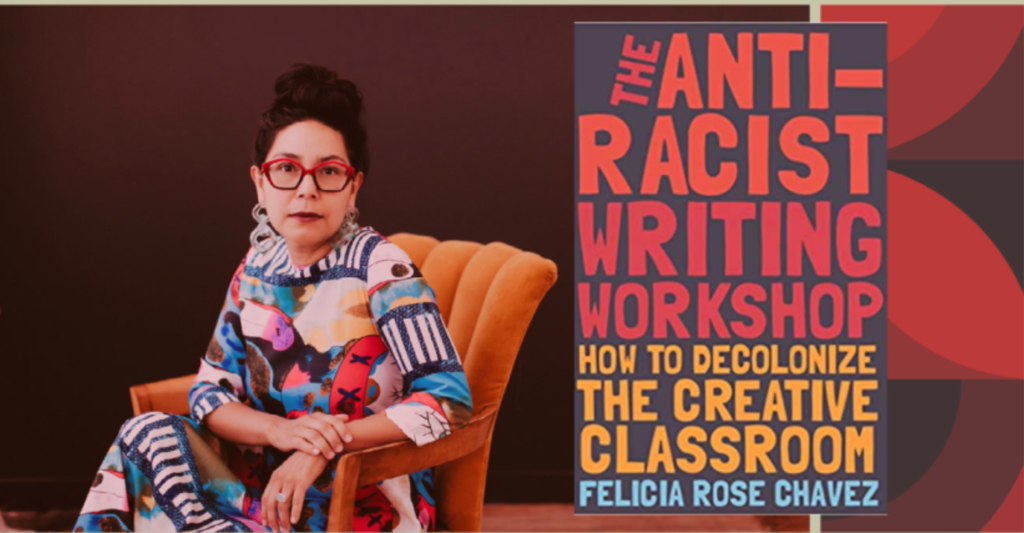
For high school teachers, my team has been reading Felicia Rose Chavez’s book The Anti-Racist Writing Workshop and she’s writing part memoir and part recommendation about what she would like to see changed in writing workshop at secondary and college. She’s writing about her experiences teaching writing at the university, but everything she’s writing about we’ve inherited at the high school level. How can you make the teaching of writing more invitational and more transformative for more young people. It’s really humbling and really beautiful.
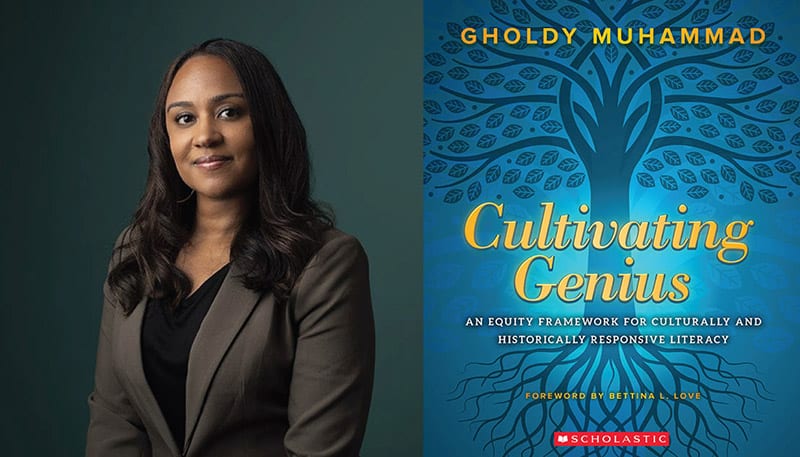
My other recommendation is Gholdy Muhammad’s Cultivating Genius. I was sort of forced to read it twice – the first time I read it, I got everything out of it I was already comfortable with. The second time I read it, I began to realize there were many things that were challenging some of my own teaching norms. She teaches us that every kid has some kind of literary heritage that we should be bringing back into classrooms.
Any final words of advice for teachers, Mary?
Teachers should not be so hard on themselves. Teachers have taught in extraordinarily versatile ways for a year and a half now – and it’s exhausting. There have been moments of real beauty but sometimes they’re hard to see because you have in your mind all the things you used to do. Focus your mind not so much on going back, but on going forward. There are a lot of different ways a classroom can look, and there are a lot of different ways students can learn. Forgive yourself and appreciate these small beauties you have created.
Q: Tell us a little bit about yourself and your family. Why are you looking forward to moving to Bend?
A couple of things about me: I have three grown kids. I have been a teacher, a building administrator. I have never taught my kids, but I have been a building administrator for all three of my children in some way, shape, or form. My wife, Stephanie, is a former critical care nurse, and also a retired school nurse. We have both worked in education, myself my entire adult life. I’m just finishing up my 32nd year in education. I spent 13 years as a teacher, 12 years as a building administrator, and getting ready to start year 8 as a district administrator.
My wife and I have been fortunate enough to find a house here. I’m going to finish out my contract in Coeur d’Alene and be here sometime in mid-June. We are also bringing a puppy with us – a rescue dog named Alfreda. She was a stray and my wife fell in love with her the moment she saw her.
I am also extremely excited to join the Bend community. I feel so grateful for the opportunity to work with you all and others – to get to be eyeball deep in making the best learning experiences we can for kids and to help teachers and administrators and staff facilitate and grow that kind of collaborative learning experience for kids.
Q: Tell us about your biggest life moments around the topic of equity.
The biggest one for me was by far the largest learning experience I’ve had around equity – and it happened as an adult. I’ve grown up in pretty diverse areas. I grew up in Topeka, Kansas until I was 10, and then we moved to Dodge City so my parents could take over the family farm. And then my second teaching position, where I spent for the majority of my teaching career, was in Bonner Springs. All three of those areas were quite diverse.
As a teacher in Bonner Springs, I was telling a story about growing up in Topeka. Both my parents were teachers and we lived in a fairy frugal house, in a very diverse and poor neighborhood. The middle school was right next to the elementary school and sometimes the older kids would pick on the younger ones.
So there I was in the Bonner Springs staff lounge, remembering all of this, and telling a story about how one day some African American boys were chasing us, trying to beat us up: they thought we had theme park tickets and they wanted them. To make it all worse, I was taking band and needed to take home my practice drums each day. So there I was: a scrawny little 4th grader, trying to get to a block mother’s house without dropping my drums. But I couldn’t run as fast, and the boys caught me and beat me up pretty bad.
Now, the secretary of the high school was Mary Kimbrough. She was African American and had worked at the high school forever, and was one of those names that was known throughout the town and commanded respect. And there I was in the staff lounge, telling this story for the laughs and the jokes. My audience was in stitches over this story of how the African American kids beat me up. Mary came up to me and she was furious. She wagged her finger in my face and she said, “Steven Cook! Those kids are just kids!”
I was stunned. I felt so small. It was the first time I’ve ever recognized that I was delineating around race – there was no reason to specify the race of those boys. Never in my life did I even consider race to be a thing. It was the first time in my life I was made to recognize my own whiteness. After that, Mary Kimbrough was so graceful and so kind to me, and helped me to grow through my own ignorance.
It impacted me deeply and personally.
Q: And the second most impactful moment?
The second one was later on, after I became a principal and was embedded in the expeditionary learning network,when I was really gaining experience and starting to feel comfortable in the shoes of an instructional leader. The training I got, and the professional development I received, as an Expeditionary Learning principal is the most transformative I have received in my career.
Q: Can you tell us a little bit more about Expeditionary Learning?
Expeditionary Learning (EL) is a style of learning that came out of Outward Bound, a project-based learning experience. And these projects are very complex and many times they involve giving back to the community in some way. One of the biggest differences between EL and the mainstream model is that we don’t compete with one another; the competition is my own to be better than I was yesterday, to engage with my own self-growth and self-efficacy. EL was absorbed by many of the inner-city charter schools and challenged the dominant culture of low expectations and helped transform it into a culture of high expectations. We have two EL schools in the Bend-La Pine district – the middle and high schools of Realms.
Q: And it was EL that was so transformative to you as an instructional leader?
Yes. It’s because of the explicit intentionality and importance they place on not just the moves you make as a teacher, and not just the moves you make as an instructional leader, but also on the moves you make that are empathetically connected to that student that is sitting right in front of you. EL asks us: are you truly doing what you can to maximize that learning experience for that student? When you think about teaching in that way, you become much more attuned, and much more connected.
Q: So when we’re talking about providing equitable instruction, what does that mean beyond providing an accessible learning experience to every student in the room?
The first thing is: can we start by agreeing that there are two moves every instructor can make right away? 1) Aspire to the best quality, Tier 1 instruction you can. That you are always looking and evaluating and making new decisions about the moves you are making. 2) Creating a community and a socio-emotional experience for every student in the room that gives them a felt comfort and a safe environment, so that they feel like they’re a part of that community.
And on the basis of both of those things are strategic moves that we can train upon. Those strategic moves are things you do as an adult that are going to create that feeling of felt safety and create that empathetic kind of relationship so I know, recognize, and understand who my learners are as individual people, and what value they are bringing into my classroom.
I came to know the Platinum Rule: don’t treat others the way you want to be treated; treat others the way they want to be treated. And if you can start to build and connect with kids on that level, you can start to recognize what their needs are.
Q: Is it those relationships and that self-reflection as a teacher that make learning accessible?
Accessibility is such a broad term…It’s almost too vague in some regards. But it starts with knowing and understanding who that kid is and what they’re bringing in the door – who had breakfast, who had a rough morning (as adults, we even struggle with rough mornings; they’re tough!). We bring whatever we have into our world.
We can talk about specific ways to do that, but creating an environment in which every kid feels welcome starts with simple things like creating an environment in which every kid gets eye contact, in which every kid gets a smile, every kid hears his or her name in a positive way. You don’t let kids off the hook, you don’t give them an opportunity to bail out of the learning experience, but you also treat them with respect and dignity when they say, “I’m struggling with this.”
As adults, we’ve all had a moment – whether it’s something you remember from your childhood, or something you’ve experienced as an adult – where someone has done something that makes you feel less than safe, or less than comfortable. Recognizing when we do that as adults, stepping back and apologizing in front of kids, might be some of the most powerful things we ever do. When we do that, we show kids that we still have a lot to learn. And if I’m aspiring to do that better than I did the day before, it means I’m taking some risks and I’m doing some things I’m not perfect at yet and I’m going to fail sometimes.
It is important to create an environment where we do that together, and embrace those mistakes and own them. And if we can do that in a way that empowers how we engage with each other, those are the kind of relationships I want to be in. If we’re afraid to make mistakes, that’s not a safe environment.
Part 1 of 2. The rest of this interview will be published next week.
OUR ELEMENTARY COLLEAGUES LOVE IT FOR A REASON! IT CAN BE JUST AS GREAT FOR SECONDARY STUDENTS.
Skyline and CDL’s math teacher Gabe Schepergerdes loves it and uses it on a daily basis. At Skyline, it is used so commonly that a subscription is provided for the staff.The CDL team was converted immediately upon seeing a demonstration about how he uses it. Throughout K-12 education, the teachers that know it, love it. No matter what grade or subject you teach, if you use slideshows, PearDeck is a fabulous engagement tool that is as easy for you as for them. Are you curious?
Gabe sells it better than I can. He provides a demonstration about how he uses it on a daily basis with his class. Because his demonstration was provided for an audience, you will be able to see both the teacher view and the student view of the experience. If you are someone who struggles to keep students engaged, or if you are also looking for new engagement tools, Gabe’s video explores this fantastic option.
Screen-sharing take A LOT of bandwidth and students don’t always have enough as it is. Pear Deck allows students to open your slide show, thus allowing you to remain in a regular WebEx session which is much more manageable for the bandwidth capabilities of many families.
Pear Deck works with either of our slideshow platforms: PowerPoint or Google Slides.
You get a real-time typing view of student work, meaning that you don’t have to wait until they press ‘Send’ to begin to prepare your responses. This also allows you to message students directly based on the direction you are seeing them heading in, rather than having to wait until they are finished to offer guidance.
Students do not see each other’s responses unless you share screen so that they can. You see everybody’s, but they do not. This allows you to ask more challenging questions, or for students to complete more challenging tasks without needing to send work to you through a different platform.
Pear Deck is free as a Google Add-on. This means that if you click on the 3 x 3 buttons on the top right of your screen, Pear Deck will be one the of the options.
The Con’s of Pear Deck
The platform improves significantly with $150/teacher. (To see the comparison list: https://www.peardeck.com/pricing) I know we are not there yet, but hopefully, in the future, we can begin to consider site or department tech subscriptions as part of a site’s curriculum or tech budget, rather than only available if provided by the district or if a department is willing to pay the entire bill (which would take most of a department budget).
One of the improvements in a Pear Deck subscription is a student-paced option, which would allow you to use Pear Deck for asynchronous presentation as well. Free Pear Deck is live delivery/teacher-paced.
Also with a subscription comes the options for students to use a drawing feature to show their work in more ways than typing words.
On balance, Pear Deck is a superior application that dramatically enhances the engagement potential of our slideshows. Whether in a live or virtual classroom, this is an app you can use. If you agree that Spring Break is an excellent time to pick up a new tech skill, we encourage you to consider this one.
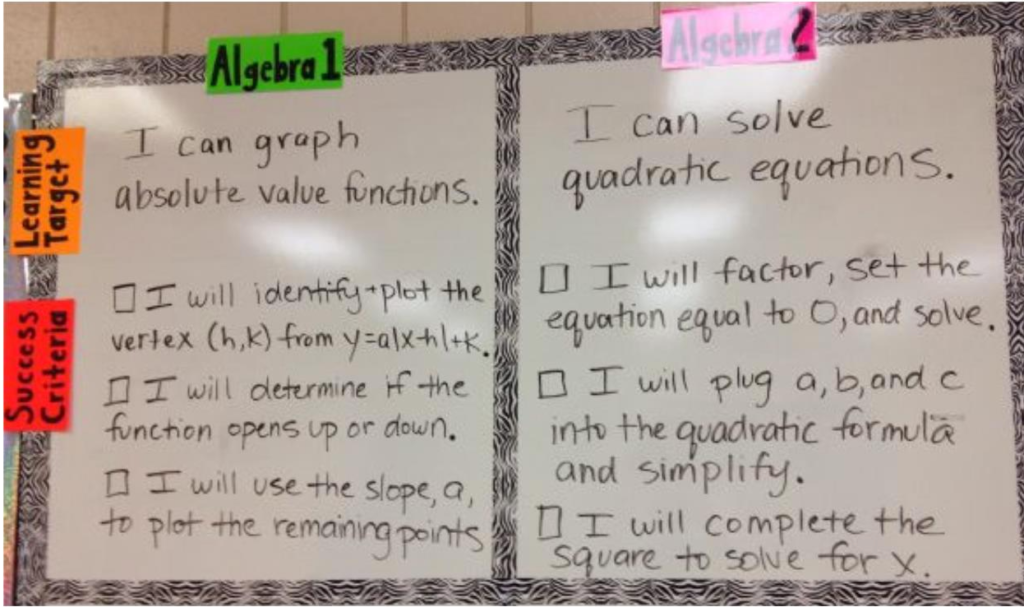
Last week’s blog focused on the importance of communicating clear learning intentions: the WHY of our lessons. This week, we focus on student success: WHAT does success look like?
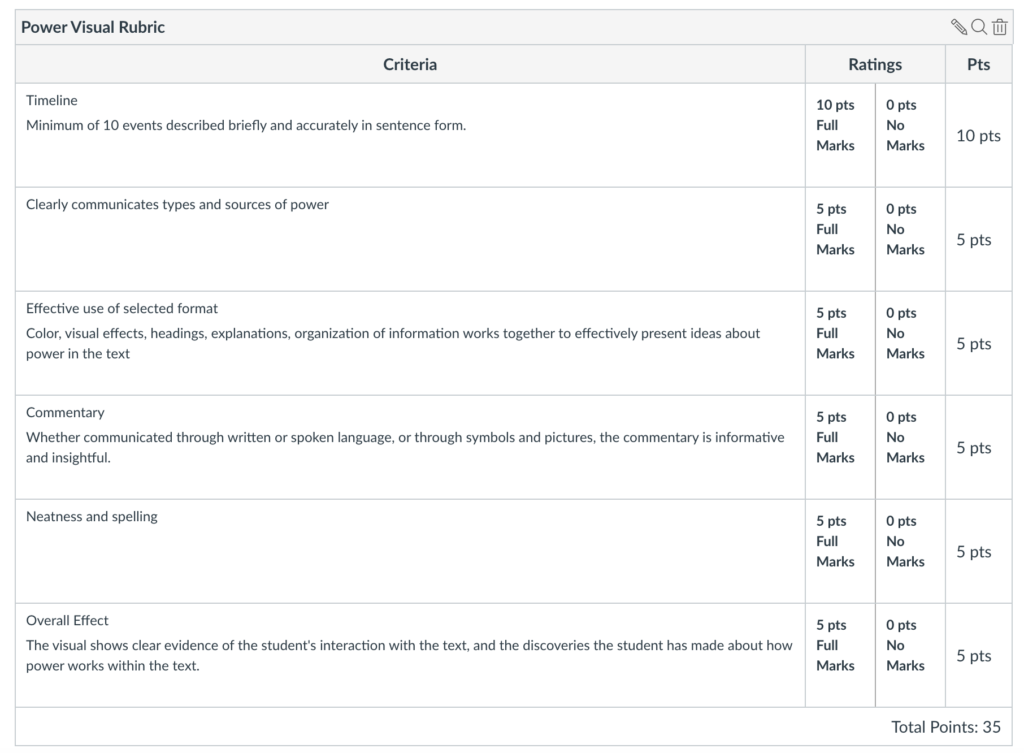
LEARNING INTENTIONS tell students where I am going; SUCCESS CRITERIA help students know how they are going to get there, and what choices they will make along the way. Students must have a clear expectations about what it looks like to be successful in the learning endeavor they are about to engage in. Success criteria provide a framework, a set of rules that students will use to understand their success in learning.
Success criteria tells students how far they will swim before they dive into their learning.
Well-written criteria give students feedback about learning. Feedback does not always have to come from the teacher. Because they know their success criteria, students can engage in more meaningful conversations with their peers about their work. Such peer assessment is they type of assessment that we get in real life. (I assure you that I shared this blog post with my peers, received feedback and made adjustments before posting it!)
Well-written criteria also enables students to engage in more effective self-assessment. Rather than asking them “How do you think you did,” we can ask them, “Where do you believe you scored and what justification do you have for your reasoning?”
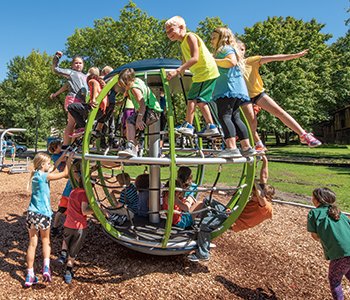
Not providing success criteria is similar to coach telling their team to play a game, but not telling them how to win or, even, very many of the rules. We’ve all been there at one time or another: think of that time on the playground when nothing was clear and we had to figure out the game as we went, hoping we got it right. Sure, some of us kept playing. Many of us walked away, accepting lesser playground status, feeling like outsiders because we didn’t seem to know what the other kids understood innately.
Clear learning intentions and success criteria have been shown to increase levels of engagement and motivation because the rules of the game are clear, and students no longer feel unsure of what to do next or what they are trying to accomplish.
When kids know their success criteria, the playground works.When students know their success criteria, the classroom works.
In our professional lives, Covid is a difficult and unwieldy gift that won’t stop giving. We’ve lost track of how many problems it has caused, how many challenges we’ve cleared, just to have five more populate our horizons.
It’s just really, REALLY hard.
However, we are starting to feel some hope: there is reason to believe we may be approaching one of the final landmark obstacle courses for this school year: the one of successfully welcoming students back into our classrooms. And we all know that, despite the simplicity of the stated task, what we encounter will be anything but simple.
To manage this challenge successfully, it is imperative that we take good care of ourselves by acknowledging our own fears and stressors, and put ourselves in the best place possible to acknowledge and support out students. None of us want to add to the trauma our students have already encountered, but we best avoid that by allowing our own histories to be valid. We MUST recognize and allow our own needs.
In different ways, we are all suffering from Covid Fatigue. UC Davis recommends the following four strategies as the ones that can make the biggest difference in our daily work lives:
Exercise: “It’s the No. 1 best thing we can do for coping,” she said. “Any exercise – even a simple walk – helps. It releases endorphins, gets some of the adrenaline out when the frustration builds up. Just getting out and moving can be really helpful for people.”
Talking: “This really helps, too. Just saying it out loud is important,” Hermanson said. “Find the right places and times, but do it. Ignoring feelings doesn’t make them go away. It’s like trying to hold a beachball underwater – eventually you lose control and it pops out. You can’t control where it goes or who it hits.”
Constructive thinking: “We may think it is the situation that causes our feelings, but actually, our feelings come from our thoughts about the situation,” she said. “We can’t change the situation, but we can adjust our thinking. Be compassionate with yourself and others. Remind yourself, ‘I’m doing the best I can.’”
Mindfulness and gratitude: “The more you do this, the easier it gets,” she said. “Try being in the moment. You’re right here, in this chair, breathing and looking around. We put ourselves through a lot of unnecessary misery projecting into the future or ruminating about the past. For now, just take life day by day.”
The strategies are simple, it’s true. But in situations as complicated as ours, the small differences made by simple actions are helpful. Think of standing up and taking a walk around your building as throwing yourself a lifeline. Think of checking in on a colleague as a worthy support for them and you.
As we move into this new phase of education during Covid, let the simple and the easy routines of basic self-care have a place in our days.
Here are some additional articles you may find interesting:
Forbes provides a brief, well-stated overview of teacher feelings, needs, and impossible choices. It does not so much provide solutions, rather a helpful statement of situation. You have to close three aggravating pop-up ads (which are bad for mental health!), but I was glad I stuck with it: Forbes – “The Mental Health Resources Teachers Need”
In a similar vein, science writer Tara Haelles authors this blog post: “Your Surge Capacity is Depleted – It’s Why You Feel Awful” Halles uses her own work/life situation to frame research about what is happening to us physiologically. It’s helpful to understand the bigger picture of our bodies during these events, and what it all means for the minds living in them.
You may find this one most helpful of all: Association of Supervision, Curriculum, and Development published Educational Leadership. January’s issue was on the emotional and mental health needs of school personnel that are arising so significantly during Covid. Here is the editorial, which contains some strong perspective and a variety of links to the other articles in the issues: “There’s Always More to the Story” – December 2020/January 2021
And, finally, Mental Health America gives us this blog post of suggestions and reminders to maintain healthy perspectives and habits as we continue to navigate during Covid: “Teachers: Protecting your Mental Health”
Teaching is hard. It is hard during usual times and it is really hard during this unusual time. But you are not alone. All of us are feeling like this is uncharted territory…because it is.
A way to feel less alone is to see how our peers are wrestling this the same issues. In the world of CDL, and of Canvas, we have a unique opportunity to observe each other virtually. Being able to participate in a class, just as a student does, will widen your view and support your instruction.
WHY DO YOU WANT TO MAKE TIME FOR THIS?
YOU CAN CHOOSE THE EXPERIENCE YOU WANT!
Watch a department member’s WebEx? Yes!
Watch a virtual session at a different site? Absolutely!
Watch a colleague that is having success in a CDL or Canvas area you struggling with? Great idea!
Watch an instructional method you want to try? (Graded discussions, high-level engagement, Jamboard, workshop or lab activities, ELL inclusion, etc.) Perfect idea!
Read a Canvas unit that interests you? Engage fully with all available aspects (watch the videos, read the discussions, etc.) to see how the teacher is progressing through the content, what strategies are being utilized, how/when can the teacher see the students are engaged and learning?
Is there are a content area or different level your are curious about? This is your chance to observe an elementary, middle, or high school teacher in our district! How are they navigating WebEx or delivering content in Canvas?
WE WILL PAY YOU!
You can observe the teaching or Canvas work of two teachers.
You will be paid for one hour, for each observation.
You must observe the duration of the class, or engage with the entire unit.
DO participate in the virtual classroom as the observed teacher wishes (silent, participate as student, ask the student questions, camera on/camera off etc.)or DO read and consider the entire unit.
DO have a purpose or “look-fors” in mind before you attend the course. You will be asked for it in the reflection.
DO watch the entire lesson.
DO make follow-up contact with the teacher you observed. (optional)
IF YOU ARE BEING OBSERVED:
DO agree to have an observer in your class.
DO communicate what you want the observer to do, and if there is anything in particular you’d like them to pay attention for.If your observer is reading a Canvas unit, DO provide some orientation about the class, your teaching goals, and how you are attending to the specific areas of struggle or success so far.
DO teach your class as if the observer is not there. This is a chance for them to experience being a student, so let them have the full experience.
Yes, the decision has been made. You have made the changes in Canvas, and have probably entered your first 50% for work not turned in. It may have been painful.
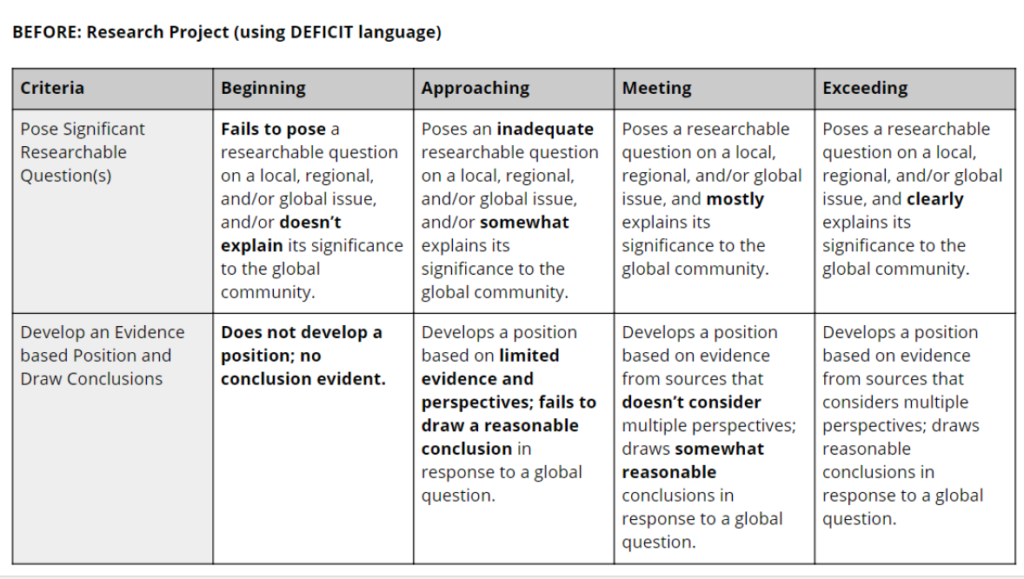
Here’s a short list of resources you may find useful, in helping to inform thinking as your own grading practices are challenged, and continue to evolve during Covid.
1. Mountain View High School English teacher, ICCL leader, and BEA rep Joel Clements hosted two staff sessions, to explain his own long-standing choice of a no-zero policy. Here is an abridged version of his presentation. Feel free to reach out to him with questions or comments.(12:30)
2. Eight sample students are illustrated in the attached SPREADSHEET. Each student earns ten grades in a course, but fails to complete either one or two assignments. The impact of earning a 0 for the missing work is compared with the impact of earning 50%.Comparison of Zeros vs ‘F’s
3. “Solving the Problems of Zeros in Grading” – Thomas Gursky has authored several books investigating grading practices. In this BLOG post, he argues for an integer system which is another version of the district’s current thinking. Thomas Gursky is considered to be a principled and reasoned expert in this field. You may find his perspective interesting.http://tguskey.com/solving-problems-zeros-grading/
4. “Taking the Stress out of Grading” – Veteran educator and principal Joe Feldman published this ARTICLE in Educational Leadership, in September of this year. It discusses the pandemic and anticipates the heroic, compassionate, and unconventional teaching you are being called on to deliver this year.Educational Leadership, September 2020
5. This Education Week article may surprise you. Also, it may be comforting to know how many districts are facing similar percentages of failing students during Covid, and how many other districts have made similar decisions to our own: “Should Schools be Giving So Many Zeros?”
6. And, finally, in the event that you missed it when we first posted on this topic in November, here is a quick clip that explains the case against zeros really well: Harvard Distinguished Author Dr. Doug Reeves, the founder of Creative Leadership Solutions, a non-profit dedicated to improving educational opportunities for students, explains why traditional zeros are mathematically inaccurate. (2:53)
We know many of you may feel confused or concerned about the district’s Covid-response move towards a no-zero grading policy. Though the move feels sudden here in Bend-La Pine, no-zero policies are ones that have gained increasing traction in schools both inside and outside of this country.
We thought it would be helpful for you to see some no-zero resources so you can be better informed about the rationale that many schools and districts have embraced.
1. Harvard Distinguished Author Dr. Doug Reeves, the founder of Creative Leadership Solution, a non-profit dedicated to improving educational opportunities for students explains why traditional zeros are mathematically inaccurate. (2:53)
2. 2017 New Jersey Superintendent of the Year Ross Kasun authors this blog post for Education Elements. He lays out the case for moving away from zeros as getting us closer to the education we all want to provide. The Misconception of Zeros
3. Liz Dunham, middle school principal in Germany, discusses the reasons zero are better for students in the short-term, but teach exactly the lessons we don’t want them to learn: Why Zeros Should Not Be Permitted
4. Fair isn’t Always Equal: Assessing and Grading in the Differentiated Classroom author Rick Wormeli discusses zeros and why they don’t work for us as teachers. Specifically, he addresses our fears around making such a shift.(8:42)
When you read the title of this week’s post, you may have felt adamant, immediate disagreement. If you are not making already making videos, it is probably because it seems like another too-difficult technology to learn, or because you don’t think it comes with enough advantages to you and your students to make the learning curve worth it.
Here’s why we’re asking you to consider recording your direct instruction if you are not already doing so: it’s better for your students.
If a video exists, students can:
a. Pause. Rewind. Play back confusing parts.They can watch entire lessons again. An aide or parent can help them learn from it. They can interact with the content in a variety of ways, on a variety of timelines. This means more ability levels have more access to your lessons.
b. Avoid being left behind. If the internet blinked out during your lesson, or a major disruption happened at home, your students have an easy way to catch up. And they don’t have to feel embarrassed about missing out.
Videos also come with benefits for you. If videos exist, you can
a. Direct absent students to the videos to catch up instead of finding ways to re-create the missed content.
b. If students are failing, you can direct them to the video, even if they are missing assignments from several weeks ago. Students have a way to access the missing content that is easier for you to manage, and that builds a stronger pathway forward.
Also, and finally, videos are EASY to make. You already have your lecture notes and your PowerPoints. Now just hit record. But remember one key tip: don’t try to make them perfect. You are not a filmmaker – you’re a teacher. Forgive yourself the mistakes; don’t even re-watch. Make videos because it will make your students’ lives easier and, by doing that, yours might get a little better too. That’s what we’re hoping for.
Have we convinced you to give it a try? WE HOPE SO! To show you how possible this can be, Joel Clements (MVHS) recorded two guide videos to help: part 1 is for beginners; part 2 for those wanting to learn more.
TECH TRAINING OPPORTUNITY: WEDNESDAY, NOVEMBER 18:
2:00-2:30: There’s No Place Like Home! Best Practice for your Canvas Home Page – Learn how to build a home page that is consistent and easily navigable for students. Location: Christie McCormick’s WebEx room
2:30-3:00: Tech Tuesday (The Wednesday Edition) – Come with your questions! We can help! Please consider using this form if you have something specific you would like to discuss with the group. Location: Scott McDonald’s WebEx room