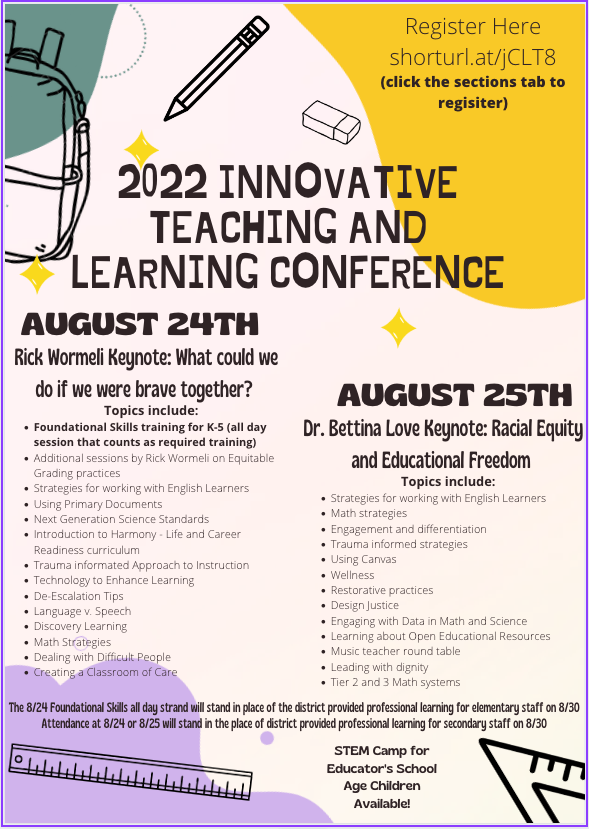
For the last several years (minus the lost year to CoVid) Bend-La Pine has put on an amazing conference. The incredible teachers of Bend-La Pine share with their peers the beautiful work that they have been doing. Along with national level speakers, BLP teachers share the innovative work that happens in our schools every day.
We are excited to bring the Innovative Teaching and Learning Conference back again this year with over 30 educators sharing what they are doing in their classrooms every day.
You can register at this link. Click on the Sections tab part way down the screen to see the registration.
Interested in learning more about our keynote speakers? Here is a sample of their work.
Rick Wormeli on late work
Dr. Bettina Love on “co-conspiratorship” for equity
As learners, we have all had that feeling of cramming something into our head for the purpose of regurgitation on an exam. We had to learn it because the know-it-all teacher says that we do. Our only option for how to show our knowledge is on the test on that one day, that one time. This is the opposite of student agency. Student agency is the way that students feel that their learning is something that they own. Student Agency provides connection, relevancy, control and self awareness of what is being taught.
Like all pedagogy, student agency comes down to specific moves that teachers make to increase the engagement and ownership that students have with their content.
Strategies That Can Increase Student Agency
Knowing Strengths as a Learner
The old adage of “Know thyself” is the first step of agency. Do they know when they are confused? Do they know what help can look like? Do they know how to best get help when they don’t know what they know they need to know? When a student engages in self assessment and metacognition, there is an awareness of how learning occurs and next steps to be taken. Once the awareness of their “stuckness” is in place they can find ways to move through it.
Posing “Ungoogleable” Questions
Many of you begin a class, lesson or unit with an essential question. This strategy can increase engagement and purpose in the lessons in which students engage. These invitations to learning bring students in by bringing their voice to the solutions.
Flexibility in Showing What You Know
There are times and standards that fit well with giving students flexibility in displaying knowledge. With options in the artifacts of learning, students must make choices in showing how they demonstrate what they know. Allowing students to have a strength based approach to their own learning makes school more meaningful.
Self Assessment
When students engage in a self assessment prior to teacher assessment they must engage in reflection. Holding assignments, projects and assessments up to a mirror before handing them over to the teacher makes them reflect on the criteria for success one last time (we hope that they are also thinking about the criteria as they work!) Focusing students back to the criteria also leads to better peer assessment.
Exit Ticket on Process
One of my favorite generic exit tickets was 3 questions (ungraded)
What did we learn today?
What was easy?
What can I do differently to help you with the things that were difficult?
These three questions gave me a lot of information about how students were digesting the lessons and gave me insights into their thinking. I would begin the next day by sharing a few of the “what we learned” to anchor us in the new learning. I also acknowledged the new moves that I would take to bring everyone to the same place. It gave the students control over how I provided instruction that led to learning. This is the definition of agency!
By Julie Montoya, Spanish Teacher and World Language TOSA, Summit High School
How do you usually finish this sentence: I always wish I spoke _________. I always wish I had learned French at some point since my father’s side of the family was from Quebec. I’m bilingual in English and Spanish, but that doesn’t stop me from wishing I spoke yet another language. Inherently, we know that each language we speak opens up authentic connections with a vast portion of the world, so we wish on…
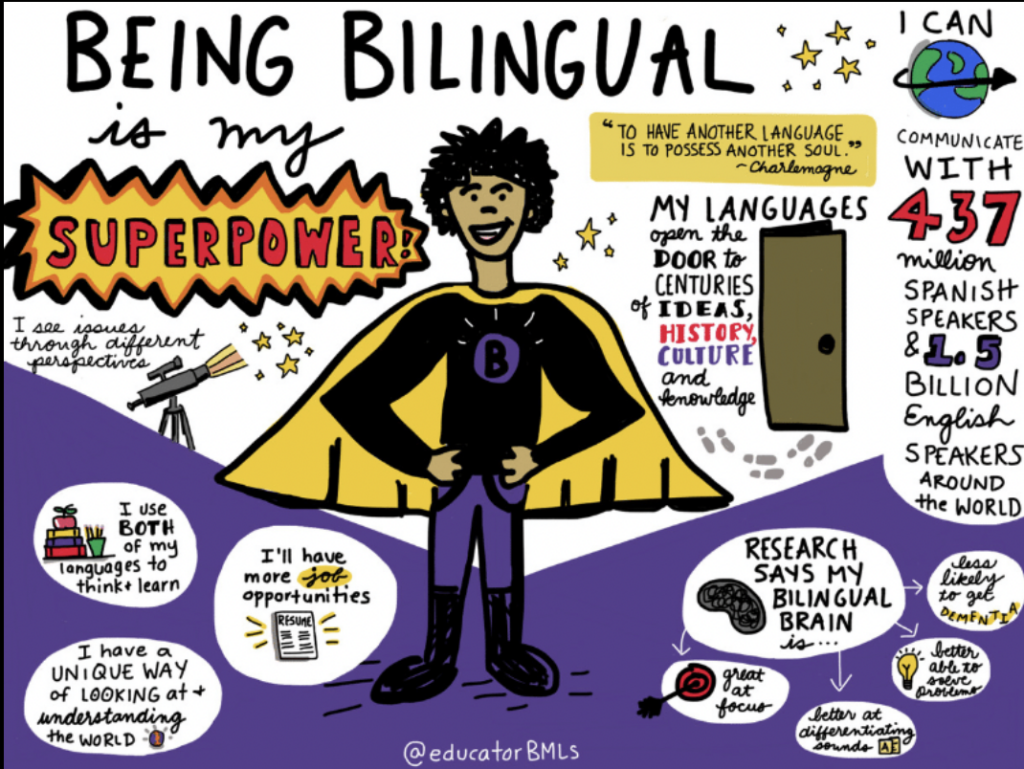
Take Away #1: Learning multiple languages creates better learners. Period. As secondary teachers, regardless of which department we roost in, understanding the World-Readiness standards by ACTFL can help us all support our students in their journeys to learn languages and become culturally competent.
World Language standards have changed substantially in the last 10-20 years. To learn about the foundations of what we do in the World Language classroom, watch this 4 minute video.
Take Away #2: I am constantly amazed at the cross-curricular connections my students are making between the content they learn about in my Spanish class and what they are learning in their other classes. This is primarily by happenstance. I can only imagine how we might work together to intentionally support our student’s global readiness. We’d love to work with you! Here are a few examples I can think of.
Music: We watch a documentary that studied the importance of Mariachi music to the Mexican-American communities in Texas with their fierce high school Mariachi competitions. We learned about the history of this genre, its key instruments, and its vocal features.
US History: We studied the important connections in Oregon to the Bracero program that began in 1942, bringing 15,000 Mexican men to Oregon to aid in critical agricultural roles. These efforts helped aid hungry American families and supported the men fighting abroad.
Literature: Thanks to the film study of Disney’s Encanto, even our beginning Spanish students know about magical realism, birthed by Gabriel Garcia Marquez. Students can identify and explain the presence of magical realism and its purpose in story-telling.
Math: Students learn how Chileans developed a mathematical formula to calculate the risk of certain geographical areas for earthquakes, which Chile experiences at an incredibly high rate.
Science/Archeology: Students learn about the prolific archeological evidence of brain surgery practice in the Incan cultures of Perú. Through studies of how bones heal, we can better understand the success rates of these practices.
Take away #3 In our World Languages classes, we consider culture through the 3 P’s: products, practices, and perspectives. Our students know this language, so try framing cultural observations in your classes with these terms. An example of this framework might involve noticing how many yellow and red flags are draped over balconies in Barcelona, Spain. The flag is the cultural project, while the public display is the practice. This leads to a discussion of the perspective of cultural, historical, and linguistic autonomy that many Catalán people feel in this region of Spain.
In a nutshell, consider exploring the cross-curricular connections at your school. Our students will grow into Global Citizens they need to become to be ready for the world.
Remember the sky that you were born under, know each of the star’s stories. Remember the moon, know who she is. Remember the sun’s birth at dawn, that is the strongest point of time. Remember sundown and the giving away to night. Remember your birth, how your mother struggled to give you form and breath. You are evidence of her life, and her mother’s, and hers. Remember your father. He is your life, also. Remember the earth whose skin you are: red earth, black earth, yellow earth, white earth brown earth, we are earth. Remember the plants, trees, animal life who all have their tribes, their families, their histories, too. Talk to them, listen to them. They are alive poems. Remember the wind. Remember her voice. She knows the origin of this universe. Remember you are all people and all people are you. Remember you are this universe and this universe is you. Remember all is in motion, is growing, is you. Remember language comes from this. Remember the dance language is, that life is. Remember.
Joy Harjo, United States Poet Laureate 2019, member of the Mvskoke/Creek Nation
Today is Earth Day, a time to remember who we are as a species and how we are connected to the Earth that sustains us. Earth Day started on college campuses April 22, 1970 to bring awareness of human’s impact on Earth and its systems. Earth Day has become a global day for action and awareness about the effects of climate change. There are a plethora of resources for involving students with Earth Day in all subject areas. I have seen many teachers and students incorporating Earth Day themes into their lessons. For example, I was at Summit High School and was excited to see students advocating actions such as used mask collection, recycling and resource awareness. At Pacific Crest sixth grade students held a Socratic Seminar on alternative energy requirements. Action empowers students and inspires change. Below are just a few some Earth Day resources.
Bend’s Earth Day Parade is Back!
The Environmental Center is set to host their annual Earth Day Fair and Parade in-person after moving to virtual events for two years during the pandemic. Click here for details! This is a fun community event that involves many students and families in the area. The parade is downtown with the Earth Fair to follow.
I love these videos! Excellent video clips that can be used to inspire writing and reflection in all subject area. Beautiful videography around themes such as on water, fire or air with celebrities voice over. Below are two examples of the videos, one in English and one in Spanish.
Invest in the Planet
This year’s Earth Day Theme is Invest in the Planet . Earthday.org provides resources for educating and inspiring students and communities members to get involved. Some resources inspire activism and show locations around the world where students are standing up for the Earth. Some resources focus on Climate Justice and actions to help the most vulnerable populations locally and globally. Other resources focus on individual moves such as eating a plant-based diet or starting a local Clean-up. Below are some tidbits from the website.
Great Global Clean-up– How to register a clean-up or learn about global success stories
Earth Day Fact Sheet – Updated in 2022 facts about many topics related to the environment from the decline of Bees to deforestation.
Climate Justice
Climate Justice is a term referring to inequitable impacts climate change on marginalized populations. Advocates for Climate Justice are calling out the social, economic and public health crisis created by a changing climate. It is predicted that climate change will result in over 1 billion climate refugees by 2050. Climate refugee are people that are displaced by ecological changes and natural disasters cause by effects of global warming. Oregon State Science Standards will incorporate climate justice in the next standards adoption. Here is a toolkit for for teachers interesting in Climate Justice topics.
Citizen Scientists
Students and community members can be Citizen Scientists that collect real data for scientists around the world. Topics range recording bird migration at backyard bird feeders to reporting bloom dates of trees. Below are a few website to get you started.
NASA Citizen Scientists Projects NASA’s citizen science projects are collaborations between scientists and interested members of the public and have helped make thousands of important scientific discoveries.
NSTA Our Beautiful Planet Showcasing Climate Science Research to Spark Curiosity and Increase Student Understanding of How the World Works
Giving Students a Sense of Hope
Discussing climate change can cause anxiety in students. A few years ago my 8th graders I asked them to think about what they would be doing in 10 years. I was shocked at the number of students that thought that the Earth would be destroyed in the next decade because of climate change. They had a fatalistic view that was heartbreaking, and this was before the pandemic. To be scientifically literate, students need to learn about climate change and the impact of human activities. As teachers we need to be aware of what is age appropriate and how students might internalize the the impacts of global warming. It is important to give students a sense of hope and the belief that they are part of the solution through action and innovation. Our students are the innovators of the their future and want to be involved.
Next Wednesday, April 20th, marks the final Educator Network Day. This optional professional development and collaboration day gives you an opportunity to connect with teachers in a learning community to engage in issues important to your content.
You will be paid for your prep time. Content ICCLs will share timesheets at the training. Please return timesheets to Dean Richards in TLC or via email at [email protected].
Times
(unless otherwise noted)
Middle School 3:15-4:30
High School 2:30-3:45
Secondary (MS & HS) 3:15-4:00
Content/Level
Major Agenda Items
Facilitator(s)
Meeting Space
WebEx Option
Band
Check-ins Advocacy update Questions for the advocacy team Good of the order
Health:Introduction to “Catch My Breath” pilot program for vaping prevention. How to access this FREE curriculum and lesson demonstration PE:Give One, Get OneBring your favorite/best instant activity, warm up, game, lead up game, grading tool, whatever to share with your colleagues. And tour Caldera’s PE facilities.
Aimee Snyder(DCHD) Denise Horton
Caldera High School Room 226 (Health) Gym (PE)
Language Arts (MS)
Team Time Assessment Discussion Reading Intervention Discussion Build up Our Collective Resources
We will be reviewing school specific Youth Truth data in the social-emotional and engagement categories. The goal is to support counselors in using this information to take the next steps in building a data informed, comprehensive school counseling program.
Jess Calbreath Lynne Tat Jennifer Hauth
Caldera High School, Room 210
Science (HS)
PLS’s work together to complete the site Science Safety checklist
Colleen Behrens
Laura Gemignani
Meet in Laura’s Webex to start Work at your school site
A few years ago toward the end of a year of teaching 6th grade math and science abroad I had a very big Aha moment. My students were about to take the NWEA MAPS test and were very stressed out about it. As I dug into why students were feeling so stressed I heard them say they were worried about having to concentrate for longer periods than they thought they were capable of, they were worried about not knowing or understanding the material and as a result, failing. In some cases the stress caused students to have physical symptoms, including stomach and headaches.
So I decided to try a small experiment. Of the two classes I taught, half of the students would be testing all week with me and the other half would be testing with my teaching partner. The classes were pretty comparable in skills, ability and diversity. First, I decided to try and reframe the stress. I shared with my students how stress works in our bodies. We learned about how the amygdala works and how hormones like cortisol and adrenaline change how the mind functions. I introduced them to mindfulness techniques and “moving to learn” strategies. We practiced these while learning in our regular day BEFORE the big test.
Then on the day of the test I used every mindfulness technique I knew to make the climate of our class a soothing environment. I used aroma therapy, I had soothing photos of the beaches and mountains displayed on the screen, I played soft classical music and even had students do some breathing exercises beforehand. I also encouraged students to drink water and to move every 15 minutes (stretch or do a yoga pose).
Okay, it was just one class but the students who tested with me had appreciably better results AND most importantly they were a lot less stressed; I even caught a few students humming or smiling as they worked. I also felt the students who really did have a tough time focusing for lengths of time did so much better (no impulsive quick clicking) when they knew they could get up and move, get a drink or go to the bathroom when their brains needed a break. Students who needed to also used fidget gadgets to help concentrate and students could sit or stand while they worked.
“When you change your mind about stress you can change your body’s response to stress”.
Well, I followed up my Aha moment with some research on how and why those ideas may have worked. If you want to know more, first check out this approximately 15 minute Ted Talk on reframing stress, that is, making stress your friend.
Second, choose from a couple of short readings from Edutopia that give concrete ideas for helping you and your students understand and reduce stress anxiety due to testing.
You don’t need to be a psychologist or someone that has experienced Burnout to see the writing on the wall in education right now: Educators are exhausted! And while some of you may or may not be in Burnout, our educational environment has been primed for educator enervation for some time: toss in a pandemic, hybrid learning, politics, & social discord, how could we not be debilitated and unmotivated? When experts discuss Burnout, the solution is generally in prevention. But here’s the thing: Educators are in Burnout right now! We are past the point of prevention; We need intervention. So if you’re tapped out and not sure how you’re going to get to this school year’s finish line, I hope these suggestions are helpful!:
Rest to Energize
If you are exhausted, then the first thing you need to do is rest. Give yourself permission to “do nothing.” While productivity can be a component of a meaningful life, our bodies need 6-8 hours of sleep a night under normal conditions. What you are experiencing in schools right now is not normal. So rest.This might require creativity and asking for help, but rest. And once you’ve rested, consider ways to replenish your energy: “What do I need to get my pilot light back to a functioning flame?” Did I forget to mention you should rest?
Laugh
There’s tons of research out there to support the idea that laughter is the best medicine. So go ahead, tell a dad joke, follow Tony Baker on Instagram, Bored Teachers on TikTok, or watch America’s Funniest Home Videos on YouTube. Whatever makes you laugh, add a daily dose or two.
Use the Ostrich Approach
Okay, this one might ruffle some feathers (see what I did there?), but we all could probably benefit from taking a break from the negative stimuli coming at us. Microdose (or eliminate) the news and social media you take in rather than ruminating on things we have little or no control over.
Get Outside
Here me out. I’m not asking you to go for a run when you’re too tired to put on your shoes. I am asking you to go outside. Sit on the curb. Find a bench. Lay on the grass. If you’re inspired to move afterwards, fine, but this is not what I’m encouraging you to do at this point. Just being in nature is shown to reduce the impact of stress and has tons of health benefits. So spend some time outside. It helps.
Call the Doctor &/or Therapist
Don’t underestimate the power of medical practitioners on our mental wellness. If you are barely hanging on, you really should be talking with your medical provider and/or therapist (bonus tip: research shows doing both simultaneously is where we get the biggest bang for our buck). Medications and supplements such as magnesium, B-Vitamins, L-theanine, are clinically proven to boost mood, so talk with your doctor to see if any of these could be helpful for you. (Reminder: OEBB benefits include free counseling through the Employee Assistance Program)
Express Yourself
What’s the saying? “A problem shared is halved; A joy shared is doubled.” The data indicates that talking about an issue with the purpose of processing our feelings improves our mood and functioning. Also, research shows it is just as beneficial to journal about our experience as it is to talk with someone. So let it out! Come to our Culture of Care Virtual Community Circles and talk with other educators or scream onto the paper. Either way, be brave and communicate your feelings.
Revisit Your Why
Taking time to reflect on our meaning and purpose in regards to our work, works! Research shows that people who take time to reflect on their values have lower levels of that pesky stress hormone cortisol! So go ahead and reflect on your career in the current environment: “Why did I choose education?” “Where do I add the greatest value?” “How do I measure success?” “What do I need to keep going?”
Practice Maitri
Maitri is Sanskrit for “gentle loving kindness towards oneself.” We are wired to be negative. If we were perpetually positive, we’d probably be extinct. Still, somewhere along the way, this negative propensity has turned against us. Data suggests that negative thinking is directly tied to mood disorders and cognitive functioning. I am not telling you to “turn that frown upside down” (gross!) but instead, squash those ANTs (Automatic Negative Thoughts) with more helpful realistic statements.
Adjust Expectations & Postpone Big Decisions
Regardless of your situation, this is not what we signed up for. The entire world is struggling to adjust to the current state of affairs. I know this isn’t easy, but the expectations we held even at the beginning of this year do not fit the current situation, so we need to let it go. Along that same line, as you’re relinquishing your expectations, postpone making any big decisions until you are rested and regulated. It is absolutely okay to adjust course and change plans (sometimes it is imperative), but research indicates that we tend to be less satisfied with our choices when we make them under duress.
Plan the After Party
Planning a trip or something fun is important to our wellbeing. I know there have been years where all I wanted to do for summer break was nothing. But data indicates that planning a trip is as beneficial as actually taking one! It’s like the process of planning allows us to take a mini-vacation just by thinking about what we will be doing. So even if you don’t end up taking a trip, mapping out an ideal vacation, whether it’s a trip to Tahiti or a hammock in your yard can help relieve your stress in the here and now.
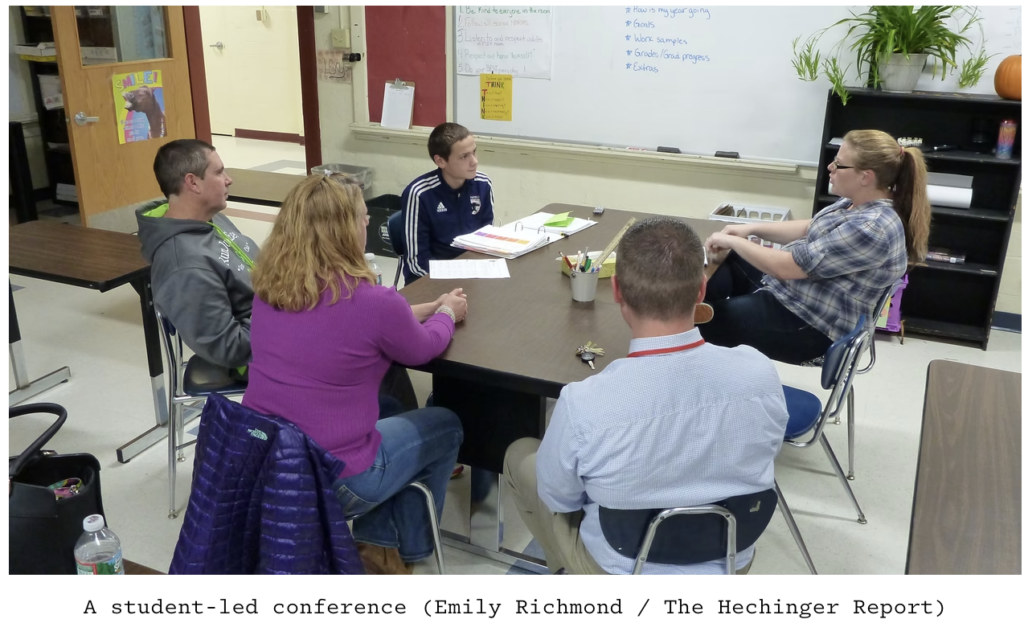
“It’s not about us as teachers! The student is the center of the conference, so the student gets to be the one who facilitates the conference.”
Once our schools went to student-led conferences we were hooked. Parents no longer had to wait in line to talk to the teacher, students were more involved and the responsibility for the conversation shifted from the teacher to the student and parents. Students had conversations that were targeted on their learning, challenges and successes. Students were very honest and reflective and we were observers that answered questions and provided feedback when needed.
One thing to note, setting up student-led conferences does take some time up front, however, the reward is worth it, and once students are conferencing with their families you can relax a bit. We found it far less tiring to conference this way than the traditional ways of having the teacher lead the conference. Every student conferences, either at school or at home if they don’t come in. Watch this 5 minute video about Student-Led Conference.
Student-led conferences can be set up a few different ways. One option is a conference with the teacher, the student and the parents with the student taking the lead as the teacher observes. Another option is setting up your classroom 4 to 6 conference areas. Direct families to sit at an available table when they enter the room. Give parents/guardians the option to have you sit with them and answer any questions. Many times parents/guardians are satisfied with the student conference alone but others really want to “talk with the teacher”. As much as possible let the student share their learning, struggles and goals with their families, it’s a lovely process to watch, even for the students that have not done as well as they might have as families can now set goals or intervene as necessary.
Prepare Ahead of Time
Determine student work: Create a list of student work that shows student learning overtime or consider letting students choose the work they are most proud of or the learned the most from. In Canvas, students can refer back to assessments that were submitted in previous quarters. If you choose assessments with the same skills then you can show growth. For example, graphing analysis and interpretation from an assessment in October and a different assessment in January.
Reflect on learning and growth: Complete a student self-reflection ahead of time and keep the hard copy in case a student forgets their iPad conferences. Self-reflections on learning are meaningful and open the door discussions about strengths, challenges and goal setting.
Provide a script: Create a simple script for students to follow if they choose. Make sure they know where to find their self-reflection and Canvas assessments. It might be helpful for students to make a digital presentation for parents/guardians ahead of time. This can also be viewed at home if families can’t attend a conference.
Practice: Model how to do a conference and then pair up students so they can practice ahead of time. Provide directions at the table and encourage students to get started. Pre-teach this to students before conferences occur.
The following resources contain another video example, this one at the high school level, as well as a link to another awesome Edutopia blog article, a student google slide templet and a student reflection script. Be sure to check them out!
Many of us have used the jigsaw method with students in our classroom, or during professional development. If you are like me, you’ve wondered if the jigsaw method really works to increase student learning. Here’s the good news. John Hattie’s Visible Learning meta-analysis reveals that the Jigsaw Method has an astounding effect size of 1.20…if done right! Remember, the larger the effect size the stronger the impact on student learning. The average effect size of Hattie’s research is 0.40, or one year’s growth. This means that jigsaw can accelerate learning 3 times faster than average.
Jigsaw Refresher
In this 6 minute video, Jennifer Gonzalez from Cult of Pedagogy describes ways to organize your Jigsaw groups. Although the video does not include this last step discussed by Douglas Fisher and Nancy Frey in the article from ACSD.org Show & Tell: A Video Column / Let’s Get Jigsaw Right, it give an excellent overview of how to set-up and troubleshoot a Jigsaw.
Adding the Final Step
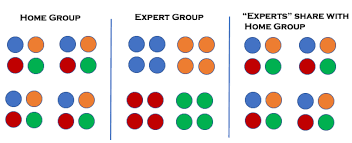
Puzzle pieces on their own have no meaning. Each piece can hint at a bigger picture but until the individual pieces fit together, we can only infer the meaning of the whole picture. The same is true of the Jigsaw Method. Students often miss the bigger picture without a step in the process that includes reflecting on how their piece contributes to understanding the whole text.
According to Douglas Fisher and Nancy Frey, one problem with using the Jigsaw strategy is the chance that a student might teach misinformation to the rest of the group. If the “expert” student has misunderstandings about their section of the text, then they inadvertently teach it wrong to the rest of their own group, thus compromising the full understanding of the text. Misconceptions can be difficult to remedy.
Some of the misunderstandings can be corrected if each group member meets with an” expert” group that reads the same section of text. With guiding questions, students are encouraged to work together to understand the text before returning to teach it to the rest of the group. If the teacher visits the “expert “groups while they are working, then correction can be caught early. This second step results in a much deeper understanding of the section of the text the expert learned about. The problem is that the “expert” does not necessarily understand how the section of text they learned about fits with the whole text. Fisher and Frey advocate for a third step when expert groups come back together a second time to discuss the question:
How does our part fit with what we have learned about the rest of the topic?
“The real learning power of this strategy lies in the critical third step, when students reconsider their assigned passage in light of the whole text…Students think about their thinking (metacognition) and synthesize and analyze ideas contained within the complete text. This process requires that students listen carefully to their peers and analyze the ways in which each part contributes to the entire text.”
Fisher and Frey
.
When students come back to their expert groups they must think about the connections, similarities and differences of their part to the newly learned content. As an example, each member of a home group receives a section of a data set about global temperature changes over time. Each member meets their expert group with the same data set for analysis and interpretation. When they return to their home group, each member shares their data set analysis with the group. The last step is for the group to determine the sequential order of all the data sets together through discussion with evidence and reasoning. Because of this last step, the student more deeply understands their own data set and whether their interpretation of a small set of data holds true when compared to the larger over-all picture.
Cooperative Learning Culture
The Jigsaw Method is a cooperative learning strategy created by Elliot Aronson in the early 1970’s as a way to break the racial tension in his classes after the desegregation of the schools in Texas. Aronson created a situation where the success of the group depended on the success of each student. Within a few weeks he saw a positive change in his class culture. The website Jigsaw Classroom.orghas more about the history and success of cooperative learning as well as tips for implementation.
Suggestions for Success
Discuss expectations for behaviors and outcomes with each transition from group to expert to group.
Create a template or organizer for students to fill out while in the expert group. This ensures the same information is taken back to the group.
For emergent bilinguals, annotateacademic and figurative language to make it more accessible.
Support discussions with guiding questions and sentence starters.
Assign specific jobs for each member during the small group work: Discussion leader, Timekeeper, Team Captain, Materials Manager
Add self-reflection time for students to monitor their contribution to the group and their understanding of the article content.
Tell students they will return to expert groups to think about what they have learned in relation to what they taught.
Resources
The Pedagogy in Action has tips for designing a successful Jigsaw at the high school
Have you ever spent the weekend grading student work, writing all kinds of comments to help them understand their grade and ways the student can improve only to find that once they see the grade they “round file” the paper without even a glance at your carefully crafted responses? I always wondered why it seemed that I was working harder than my students and that students did not seem to care about their learning, but just the grade.
Many teachers and administrators recognize the use of rubrics in terms of an equitable grading practice. Another advantage of using rubrics is to allow students to see the specific target and to self assess where they are in relation to that target and to get immediate feedback from the teacher to reflect on how specifically they can move their learning forward.
In essence rubrics can help students:
Understand expectations and components of a task/assessment.
Become more aware of their learning process and progress.
Improve work through timely and detailed feedback.
In addition rubrics can improve student learning by allowing students to peer-assess and self-assess learning. Through scoring guidelines, students can learn the value of giving and getting feedback and reflect more on the learning process rather than the grade.
What makes an ‘effective’ rubric?
The most effective rubrics lay out three kinds of information for students: the key evaluative criteria, defined as concretely as possible, an evaluative range for each criterion so that students can see where they succeeded (or not) for each criterion, and weightings for each criterion. During the task, students use the rubric as a checklist to assess their product and track their progress. Rubrics are excellent tools to promote peer assessment, where students learn how to give and receive constructive feedback.
Maybe you’ve already used rubrics in your classroom but find them time consuming to create. There’s a third option that introduces some exciting and game-changing potential for teachers and students. Check out Danah Hashem’s article also in Edutopia “6 Reasons to Try a Single-Point Rubric”.
Here is an example of what a single point rubric might look like:
In addition to the possible solutions for giving constructive and timely feedback to students, rubrics can help teachers manage the amount of time they spend grading. I encourage you to check out the Cult of Pedagogy video (less than 4 minutes)