Many teachers use some version of points in their grading system. Points may be given for assignments and assessments, extra credit, behavior, participation, and/or motivation. Most of us probably had teachers who used points in the classrooms we grew up in.
The downside to using points is that they can turn into a commodity that students use to get a grade, rather than an accurate representation of a student’s knowledge. Students may ask how to earn a few more points to get from an 87% to a 90%, but none would ask for those three points to move from an 84% to 87%. However, as long as the point increase is accompanied by an increase in learning, shouldn’t all increases be considered valuable?
Redos and Retakes
All of us have taught a lesson that did not go the way we’d hoped, only to get to try again the next period or the next day. What if our students stopped us and said, “Sorry, you can’t teach that to us again, you taught it yesterday!”
It is true that the world has timelines, but it also gives grace for learning. The ability to redo something happens all the time in our students’ lives. (Retaking a driving test is perhaps the most important retake our students will have in their adolescence! When our children don’t do a good enough job cleaning their room we don’t say “You got one chance to clean it!” We say, “Go back and do it until it is done correctly.” They – and us – get redos every day, when the first effort wasn’t successful.
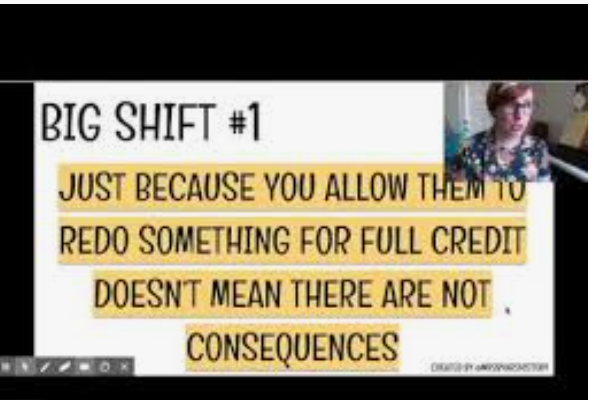
If the goal of a class is to impart knowledge to a student, then when the student demonstrates that knowledge must be flexible. The ability for students to try again to show their understanding of the content taught shows we value their learning, more than our timeline. Furthermore, if the students can represent full knowledge of course standards, they should earn 100% of the points available. Removing an artificial celling (i.e., student can only earn 80% of the original total may reward a student for persisting, but it also punishes them for not learning as fast as others. Why do we want to do that?
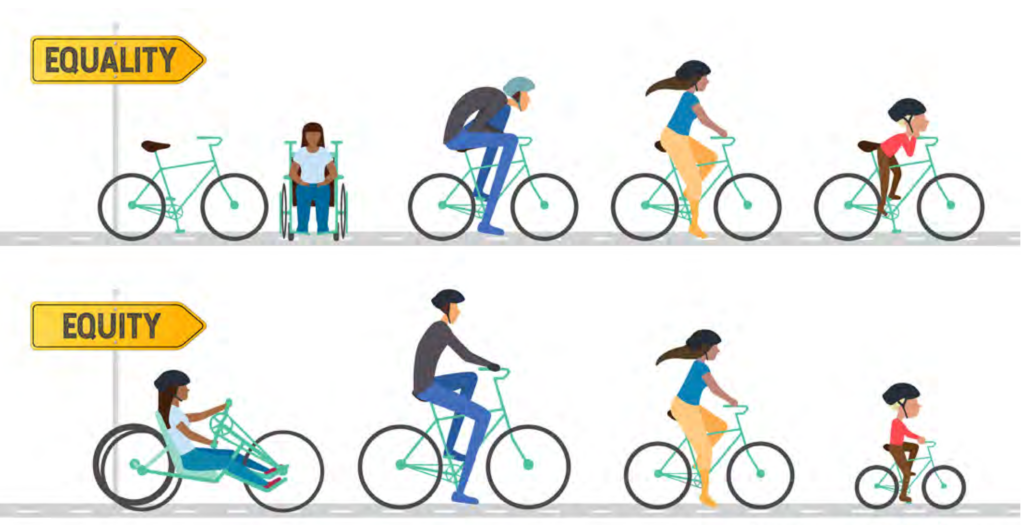
Retakes and redos as mandatory practices in classrooms provide an equal opportunity to all students to show what they have come to understand as a result of our instruction and purposeful tasks in the classroom. If a student has a history of low success in school, providing multiple opportunities to be successful breaks a cycle of low achievement. It tells the student the game is not won at halftime, but at the end – and that adjustments can be made along the way. We also send the message to the students “I will not let you fail!” We continue to push the students to learn the critical information that we have determined is worthy of their time and effort.
8:33
Extra Credit Points
By definition, extra credit points are not required. This means that is some extreme cases, the points may not even be related to the standards being taught in the course (extra points for bringing in supplies or cleaning the board.) Extra credit exacerbates school as a game. If the purpose is for your students to know and understand a set of standards and content, then providing extra credit does not move a student toward more knowledge, it makes a grade currency that some students look to collect.
Extra credit can also undermine the desired outcomes of student learning. Students who play the point chasing game can give less effort to important key learning only to “make up” points with less critical knowledge. If the extra credit points are tied tightly to the learning of the course, then shouldn’t they be available to all students, not just those who have the knowledge of how to navigate the educational system. If the work is important, require it; if it is not, don’t include it in the grade.
While much of the conversation around equitable grading can be about what ends up on a report card, we all know there is a lot that goes into the creation of that final grade. The Equitable Grading Think Tank is also looking at the processes that guide the formation of that grade. Today’s post is about one area of their exploration: Homework.
There is no doubt that homework is an important part of a student’s school experience. Homework is the application of the skills and content taught in class. When homework is assigned, it is best when there is a high probability of success on the work; otherwise, students will be practicing incorrectly and will not have the ability to receive corrective feedback. We want to know if the student understands the content taught and to give them an opportunity to show that understanding. What we don’t want to do is have a student make mistakes. The old saying “Practice makes perfect” is not actually true. “Practice makes permanent” is true. This is why we want the practice to have a high level of success.
The practice that will have the most benefit for students is assigning things that a student is revisiting, is called spaced practice (6:23 minutes – works great at 1.5 speed!). This means that a homework assignment could have a few questions from a couple of weeks ago, a few questions from last week, and a couple of questions from the most recent learning that connect to the earlier parts of the homework.
In some classrooms, the homework assigned is the work of that day, (i.e., “Please finish any of today’s classwork you ran out of time to complete.”) For students with a weaker understanding of the content, the issue is now they must complete the work with fewer academic scaffolds. Students will do the work without the supports of the classroom, which includes other students who have received the same instruction and the teacher who delivered the instruction. While some students may have supports at home to produce accurate work, almost none of them will have the supports that were tied to the initial instruction. The most inequitable part of homework comes between those students who do not have the space, adult support, or ability to dedicate time (due to family and work responsibilities) to do homework and those who have all of these.
Since homework is practice, having homework play a smaller percentage of the overall grade makes sense. Grades on homework are typically given for 2 reasons: 1) correctness of work and/or 2) reasonable attempts made. If homework is given a heavy weight in an overall grade, we can have an inaccurate understanding of the students’ knowledge because the student for a variety of reasons, including correcting misunderstandings after the grade was assigned.
It is important that homework, if tabulated into a student’s grade, plays an accurate and supportive role – one that is motivating to both students and teacher. Curious to hear more? Rick Wormeli is one of the first Nationally Board Certified teachers in America, working full-time as an author, researcher, and trainer of teachers. Here, he discusses homework and grading policy.
Here’s the good news: If you did nothing more than alter your homework assignments to have more “spaced practice” characteristics, you would have taken a enormous step forward in utilizing a more equitable system that may well work better for you AND your students. It’s a possibility worth considering.
For many of us, one of the most startling parts of last year was the removal of the zero from our grading scales. The move may have felt seismic but, as with everything else, we have managed to adapt and continue on.
Meanwhile, the conversations around equitable grading have never stopped.In fact, this year, those conversations are continuing monthly among the 36 members of the Equitable Grading Think Tank. Represented on the team are a wide variety of secondary teachers as well as site and district administrators (names appear below), all of whom are deeply committed to representing their sites and our district with integrity and fairness, all of whom welcome your questions if you want to reach out.
To prepare this post, I spoke with Stephen Duvall, the group’s facilitator, current principal of Cascade, and incoming Director of College and Career Readiness, and two members of the group’s leadership team: Katie Lyons, middle school science teacher currently Cascade, previously at Marshall; and Mary Wellington, 24-year middle school Spanish teacher currently at Pacific Crest as well as long-time BEA site rep.
How is the Equitable Grading Think Tank organized?
SD: We meet monthly, during teacher-directed SIW’s. Based on applications, we’ve pulled together a group of teachers from middle and high schools across the district to have a voice in exploring equitable grading practices as a whole, and to look at making recommendations – including PD recommendations – by the end of the year. We also have folks on the team from downtown and from Information Technology so that, whatever recommendations we make, we have had all the necessary voices at the table. We’ve tried to achieve representation from every site, but there were a couple unable to participate at this time.
MW: So far, we’ve met twice. We all read Grading for Equity by Joe Feldman this summer and then we met to discuss. So far, we have focused on getting started by getting clear and unified about the ‘Why’ behind this work.
SD: We have all been tasked with keeping this work from living in isolation, with going back to our buildings and being conduits for our work. We want to be 100% transparent. Even if a teacher’s site did not have a representative apply to participate in the group, that teacher should not hesitate to reach out to us for more information and updates.
The team has also Partnered with Creative Leadership Solutions who has been very helpful in giving us a lot of resources to look at, and research to review. That organization has been very helpful in giving us ideas for how to have these conversations, and what conversations to have.
KL: We’re not here to push a model. We’re here to make recommendations after analyzing as many angles as we can.
What are the biggest learnings of the group so far?
KL: Learning why traditional grading practices are inequitable. The district has done a lot of work highlighting its own inequities – it’s a very valuable, reflective moment we’re having right now. This group pairs so nicely with those reflections, and the need for change can feel like it matters so much.
SD: The overall recognition that there is a need for a change. In broad terms, there is a sense that this is necessary work. We recently put out a survey to poll people on the ‘why’ behind the work – why is this important and why do we need to make some changes? Team members responded on a 1-4 scale: 1 = “I have no idea.” And 4 = “I am fully on board and believe this work is essential”. 100% of the group scored themselves a 3 or a 4. We are unified in this belief: there is a need for a change. Our group really is made up of a wide-range of perspectives from across the district, not unified in beliefs or in relationship to the work. So to be unified in recognizing that what we’re doing for kids is not equitable is a really substantial belief to share.
KL: Accepting the challenges we will face as a district trying to move forward. First, we have to expand the mindset and beliefs of many of our colleagues. Also, the logistics of making what feels like a drastic change in everything from classroom practices to the support systems in place to make it all work. A lot of concern has been voiced about how are we going to do this in a way that makes sense for all.
MW: There have been a couple of times during meetings where the perspective has been voiced: “This district already knows what it wants to do here.” I’m pleased to say that is not the case. I find that the admin we’re working with are very much open to hearing all perspectives from the different schools. Nothing has been decided yet. We are looking at everything. The voice of teachers and the voices of the schools is important and is going to be listened to. I don’t foresee an outcome where one decision is made for every site.
What are the big ideas the group is currently working on?
SD: Grading is a big beast. A thousand things go into it. As a group, we’ve identified four pillars for our decision-making process. We’ve looked at a number of folks out there, and everybody has some differences about their beliefs around what grading practices should be. We looked at those, and then narrowed down to the four that would be most impactful for our decision-making and selected those four. All of our research and recommendation needs to go through these four. As a group, we’ve decided that grading practices for our district need to be accurate, motivational, transparent, and bias-resistant.
From there, we’ve identified the buckets we need to examine as a group: homework, behavior’s role in the gradebook, retakes/redos; assessment methods and calculation methods; the process of identifying/using standards, scales, rubrics, and multiple methods of assessments; and systems – the structures and technologies in our buildings that will allow these changes to happen.
What will the final product of the group be?
MW: At first, we were thinking our group would be a one-year process, but we’ve since realized that may not be realistic. It may take two years – we don’t want to rush. We want to do this well. We may spend this year figuring our all the big ideas and then next year developing the PD plan.
SD: We are exploring each one of these buckets on a monthly basis. And then finding resources as well as people on our team that have been trying some of these practices. And then our goal will be to come up with a few key recommendations around best practices for that bucket. Our task is to make recommendations, not to make policy decisions.
Our second task is to make professional development recommendations around what training is needed to support a shift. No decisions have been made yet. After we make our recommendations, Lora and Steve will evaluate which recommendations will remain recommendations, and which might shift towards policy. However, no one is interested in making “thou shalt” changes as much as looking at what training and information can we provide to support staff members in moving towards more equitable grading practices.
If you were to look at neighboring large districts who have undertaken this work, it is a multi-year process. The great thing about this work is that there are some things that are easy, small shifts that can happen via small shifts in classroom practices. And then there are much bigger lifts that would require a lot more time and infrastructural investment. District teachers can know this work is being done thoughtfully and methodically over a large span of time. No one will be required to make huge changes quickly.
Can you give me an example of a topic and process you’re following to explore it?
SD: We are working with the topic of homework as a whole by looking at a wide variety of articles and videos; we also have some team members trying out a variety of strategies that will share their observations with us.
MW: With homework, what do we see? What is it that’s equitable? What is it that’s not? How can we communicate all that in such a way that people are going to understand and acknowledge our own inequitable practice, but then tweak it and make it a better thing? Instead of giving homework because we always have, how can we assign it in such a way that it benefits all students instead of hindering those without the home situations to support it?
SD: After looking at our research and hearing about the experiences of our colleagues as they’ve been trying certain things, we’re going to make a few bullet points of best practice recommendations. And then those will go to Lora and Steve who can take it from there.
Is there anything you especially want teachers to know, or to ask you about?
MW: Anything that people want to ask me about helps clarify for things for me too. It’s helpful to have to talk through ideas or explain reasons behind certain thinking. But we’re also early in the process – so my answers may still be evolving.
KL: Teachers are coming to their own reckoning. I’m hearing a lot of conversations around teachers wanting to do this work. My advice would be: absolutely! Absolutely delve in the waters and do your own research; but also know there is a team going about this in the most evidence-based and methodical way to ensure there is consistency moving forward and to ensure – for anything we want to do – we do it in a supported way.
We’re all so eager and I’m hearing lots of people wanting to hurry and make big changes. Part of me wants to tell them to slow down because this is such hard work. Good teachers that realize something is unfair want to fix it immediately, but we have to do it right. The power of doing this work together is exactly why we can do this work successfully.
Who is in the group, in case I have follow-up questions or want to look at some of the resources?
For most of us, our middle school and high school math and science classes were taught in isolation. Today not much has changed. A student will go to a math class and then to a science class and – though the content and concepts might be related – they are taught in isolation. In science, many of the Science and Engineering Processes (SEP) rely on mathematical computation to answer complex questions about phenomena. As students progress, conceptual learning relies on more complex mathematical reasoning for sense-making. In mathematics, students experience most learning of algorithms as deriving, manipulating, and memorizing “naked numbers” without context, and then may have some “word problems” in the independent work where they must decide which algorithm to use and what numbers to plug in.
What if the student’s experience was more of a crossover between their math and science courses? The CCSS-Mathematics and the NGSS have a lot in common.
Figure 1 compares the eight Mathematical Practices (MP) to the eight Science and Engineering Practices (SEP).
The terminology might be different between the MP and the SEP but the conceptual understandings are similar. Math and science teachers can explicitly teach the terminology of the MP and SEP in their classes to help students understand the interconnectedness of the two domains. Check out this video: here’s what one middle school did to help their students make those connections (6:49 minutes).
Similarly, the area of applied mathematics requires students to use mathematical modeling to describe scientific phenomena. UC Santa Cruz offers us a short video describing how their mathematicians, scientists and engineers use mathematics in their fields (3:41 minutes).
There are challenges to creating interdisciplinary experiences but how can we think differently about what we teach and how students learn? How can we create more opportunities for students to make real-world connections between math and science/engineering practices?
Below are some possible actions for math and science departments in the pursuit of more interconnection/overlap:
Compare terminology in math and science and explicitly teach in both subjects. For example, How is a conjecture in math similar to a hypothesis in science?
Coordinate SIW meetings to discuss the similarity and differences between the MP and SEP’s
Conduct learning walks where math teachers and science teachers observe each other in action.
Ask students to reflect on their experiences in both science and math.
Plan for opportunities to incorporate developing mathematical models, use computational thinking, and construct viable arguments, critique and debate the reasoning of others based on evidence across both disciplines.
Revisit the overlapping skills with the CCSS and the NGSS and intentionally include elements into your lessons.
TUVA LABS data analysis tool available as part of Stemscopes units for middle School science
Gizmos Math and Science simulations. All BLSD high school science teachers have access. Curious math and middle school teachers can reach out to Colleen.
Works Consulted: Mayes, Robert, and Thomas Koballa. “Exploring the Science Framework: Making connections in math with Common Core State Standards.” NSTA, Dec. 2012, static.nsta.org/ngss/resources/201212_Framework-MayesKoballa.pdf.
#1: WHAT IS NEWSELA? Newsela is an instructional tool that allows teachers to find articles with appropriate reading levels for their students. Newsela articles feature questions and writing prompts that align with common core standards. Newsela allows teachers to bring real life events into the classroom with engaging content and analytics that all students can access: ELA, Foreign Language, Social Studies, Math, Science, ELL, Current Events, Social-Emotional learning and more. It truly is an amazing tool that allows us, teachers, to give our students specifically targeted articles on just about anything (read: ANY subject can benefit!)
WATCH THIS VIDEO to see how to explore content and use the unique search capabilities.
#2: NEWSELA IS MORE THAN PDF ARTICLES: Newsela as a stand-alone…
You certainly don’t have to use Newsela and Canvas together. On its own, Newsela is packed with powerful tools to help you share current information on nearly any topic. It’s a great way to build literacy and allow your students to adjust the reading to their own specific needs. Start by enabling your district account by signing in through Clever. You’ll have access to all text sets and articles this way. You can also save content to use later. This is also where you’ll send your students to access digital news articles. WATCH THIS video to see all the Newsela features.
The PRO/CON text sets and Lesson Guides have everything you need to quickly plan a great lesson supported by age-appropriate reading levels for you students. (READ: Quick Sub Plans in a Pinch!)
#3: YOU LOVE NEWSELA, AND YOU WANT TO USE IT WITH CANVAS
START HERE: How to Sync Canvas & NewselaIt’s a teeny bit lengthy process (10 minutes), but I think you’ll be pleased with how Canvas and Newsela work together to make your life easier.
WHY MERGE THE TWO?
Newsela is available in ALL Canvas courses via the left-hand Navigation menu (if it’s not visible go to the bottom, hit Settings > Navigation and then drag Newsela to the top visible > SAVE)
Enables users to log into Newsela from Canvas & Use Newsela within canvas
Imports Canvas classes and class rosters into Newsela
Streamlines assignment creation: Newsela assignments created in Canvas are automatically created in Newsela
Streamlines grading: Grades do not pass from Newsela to Canvas; however, Newsela assignments appear as submissions and can be viewed and graded in Speedgrader.
See your students’ analysis & synthesis right in Canvas, directly on the Newsela materials you assigned
Assign pre-made or self-made activities for students to complete directly in Newsela: Quizzes, Writing Prompts, & More
ADDITIONAL RESOURCES: How to Embed Newsela Content in Canvas Assignment
Lucy Calkins Units of Study x Newsela Collaboration– If you teach ELA and use the Units of Study, this is actually a super cool training you can quickly do to see how you could integrate Newsela texts within your units.
(Navigation note: all blue text is linked to support documentation.)
As we attempt acclimation to a new school year, educators, students, and families continue to experience changes and conditions that are unexpected and unwanted – to hold the unknown as a chronic state instead of a “fun Friday” freedom. Equipped with nervous systems designed to operate briefly at crisis response (also known as “surge capacity”) levels, days can feel like weeks and each month, a year. Chronic exposure to unmanageable and unpredictable stress is at the heart of what makes the pandemic a slow-moving, traumatic experience for everyone involved with schools.
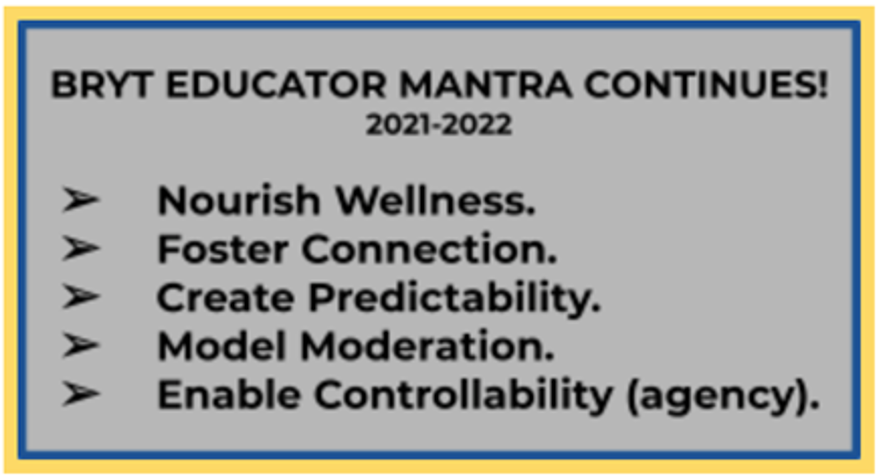
BRYT is honored to work with BLS coaches and leaders to support school-based Student Success teams in developing an intensive intervention for some of the district’s most seriously struggling students and families. At the same time, we recognize that all students, families, and educators are experiencing significant challenges, and teachers are facing the realities of dysregulation every period of every day.Dr. Bruce Perry’s core message is instructive in this regard: if we are to work with students in a way that fosters their ability to reason and reflect (critical for internalizing, retaining, and applying new knowledge), we first need to make sure that they are emotionally regulatedand able to relate to their teachers and each other. Here is our mantra for this work:
Nourishing Wellness & Modeling Moderation: Educators are dealing with more challenges and stressors than ever. While healthy levels of stress help us grow and become stronger, we cannot expect to work effectively and sustainably with students over the course of this school year if we are not afforded the time and resources to take care of ourselves and each other. Wellness doesn’t just happen—it depends on leaders and educators alike to set and sustain intention, making it not just okay, but an integral part of a systematic culture of care among school staff. As we work to support the students in front of us every day, we must also continue to increase our awareness of how systems either promote wellness or perpetuate disease and suffering, especially for those who are marginalized with less privilege and power—and as we increase our awareness, we can and must continue to engage in the kinds of uncomfortable reflections and conversations that address the inequitable distribution of wellness that too consistently characterizes our communities. When educators are cared for, a culture of care is then naturally extended to students and their families.
Fostering Connection: Consider integrating consistent, semi-structured non-academic check-ins with all students. These might happen in the context of advisory programs, or on a rotating basis during class. It is essential that all educators understand each school’s mental health infrastructure and referral process, in order to know exactly how to access support for students. Based on observations and information collected in check-ins, educators can provide basic support and care to students facing mild challenges. When there is heightened concern for wellbeing (perhaps due to a sudden change in behavior, appearance, or function) teachers can quickly notify administrators and support staff.
Create Predictability and Enable Agency: After so much inconsistency and time away from school, many students continue to be disoriented. Ongoing focus on orienting students to people, places, and routines/use of time is critical—even when it feels like they “should” be fully oriented and even if this means pushing back against pressure (whether real or internalized) about the need for academic catch-up. Providing achievable opportunities for students to choose how they engage with learning offers a sense of control. Additionally, this is the time for all educators to expand their tactics for helping themselves and students regulate emotionally through consistent rituals and routines, movement breaks, mindfulness, intentional transitions, and integrated SEL skills. For those interested in broader understanding and tactics, Dr. Perry’s team provides many resources.
In building relationships and fostering powerful connections, entire communities benefit. When our interactions are full of compassion, grace, and hope, there is profound potential to heal, strengthen, regulate, and create belonging—whether it’s holding a door, negotiating an extension on an assignment, or reassuring an exhausted parent or colleague that they are not alone.
CURIOUS ABOUT PEAR DECK? – This article provides a pro/con comparison and training video recorded by former BLPS teacher Gabe Schepergerdes. Teachers spanning the K-12 spectrum swear by it as an engaging instructional organizational tool. And because it’s basically a PowerPoint of your classroom day, it is easy to upload to Canvas for anyone who is absent. https://blogs.bend.k12.or.us/dean.richards/2021/03/15/curious-about-pear-deck/
AN ‘F’ IS AN ‘F’ IS AN ‘F’…OR IS IT? We know the conversation and controversy about removing 0% F’s from our grading scale is a difficult issue for many. Here are a collection of brief resources, helping to frame the conversation that has taken place in many districts around the country:https://blogs.bend.k12.or.us/dean.richards/2020/11/24/an-f-is-an-f-is-an-f-or-is-it/
LANGUAGE ARTS: Leah Boon graduated from the University of Oregon with a Bachelor of Arts in Spanish and a Bachelor of Arts in International Studies with an emphasis in International Education. She was always (and always will be!) interested in language, learning, and traveling. Shortly after an inspiring undergraduate experience in Eugene and Spain, she moved to Bend and started her MAT program at OSU Cascades. Leah has been teaching at Cascade Middle School for the past 10 years. Having taught 7th grade TAG Humanities, 6th grade Humanities, Yearbook, Journalism, and developed the Broadcasting elective, she’s finally settled into 8th grade Language Arts and Social Studies for the past four years. While her Spanish has been dwindling over the years, Leah has been passionate about the direction the MS ELA department is headed and the work being done district-wide to better support all students. Leah was lucky enough to work this past year on the Middle School Diversity Project and is excited about where this work will lead. What is a goal you have for yourself? I have a mix of some weird traits — I’m competitive, stubborn, super curious, and obsessed with reading & research, which I think makes for a great teacher who consistently wants to do better for my students. This year I really want to work on effective feedback (and TIMELY feedback, which can be so hard) so my goal is to try a lot of different combinations of quick, formative, and specific feedback for students. Process-over-Product is my goal this year. How will you celebrate it when you accomplish it? Well, it’s going to be an ongoing goal to work on this year. I think I’ll know when I see students making strong gains as a result. I just know I’m my best self when I consistently prioritize self-care like reading, Barre3 & running, coffee, a few reality TV shows, and time outdoors with my family.
LANGUAGE ARTS: Michele Clements started teaching for Bend-La Pine Schools in 1998, as a student teacher for Helen Webre at Mountain View. Over the next twenty years, she earned two Master’s Degrees and taught all high school grades and levels, as well as serving in a variety of committee and leadership roles. Added to the mix, Michele coached competitive speech and debate for fifteen years, and had a part-part-part-time job as a wedding coordinator for five years – both of which came with surprisingly useful skill sets to acquire. After several years leading the Diversity Project, CDA development, and a regional PLC made up of high school English teachers and college writing instructors, she transitioned out of the classroom and into a Language Arts coordinator role. Her husband still teaches Language Arts for Mountain View and their two children LOVE to read! At the dinner table, they practice writing literary essays for fun. (Not really.) (Or do they…?) QUESTION: What is a goal you have for yourself? One of my goals is to offer useful, meaningful, hopefully high-quality professional development experiences to our district on a regular and ongoing basis. This will happen in a variety of ways, from trainings, to book chapters, to resource lists, to blog posts. QUESTION: How will you celebrate yourself when you accomplish it? There are so many opportunities here, and many of them cover large spans of time, so I don’t think there will be a big “I did it!” celebration. However, I am assure you: the two days after the Mary Ehrenworth trainings, I took off, off, off!
MATH: Linda Adams found her calling in teaching while living abroad. Her first teaching position was middle school girls’ PE in Seoul, Korea. After 3 years of wonderful experiences, she repatriated back to Oregon to complete her Masters in Education at Eastern Oregon University. Linda did her student teaching at Lapine Middle School then continued to teach in the Bend LaPine SD (3Rivers, Skyview, Cascade) for 10 years. In the last 8 years she taught in Kuala Lumpur, Malaysia for 3, coordinated the Math-in-Real-Life Project for HDESD for 3 and finally spent the last 2 years as the Secondary Math Coach for Jefferson County SD. Linda has two adult children who grew up and thrived in our wonderful Bend schools, both going on to study engineering at OSU. QUESTION: What is a goal you have for yourself? One of my professional goals is to grow into being a better agent of change. I will do this by becoming a stellar listener, by using coaching strategies that help others realize their own professional goals, and by adding value to a vision of possibilities that allows our students to thrive in education. QUESTION: How will you celebrate yourself when you accomplish your goal? While I am always about celebrating milestones (think dancing and travel), I believe this is an ongoing goal that gives my life meaning and I will always be refining it!
SCIENCE: Colleen Behrens Teaching science and being a leader in the science community has been Colleen’s passion since she started teaching. She began her teaching career in Bend, Oregon at St. Francis School (now McMinemins) as a middle school science teacher. When St. Francis moved East, she moved West to Corvallis to earn her MS degree in Science Education. Colleen returned to Bend to teach science at Pilot Butte Middle School. Since joining BLPS, Colleen has participated in committees focused on district and school improvement, science literacy, curriculum and standards adoption, and equity. She has been an ICCL leader for 15 years, a PLC leader for PBMS transition to an International Baccalaureate and has an ESOL endorsement. Colleen loves birding, hiking, camping and exploring Eastern Oregon with her husband and chocolate lab, Chet. QUESTION: What is a goal you have for yourself? My goal is to create a collaborative culture where teachers feel excited about becoming their best selves in the classroom. When our collaboration is done, I want teachers to feel valued as professionals and empowered to make positive changes in their teaching. QUESTION: How will you celebrate yourself when you accomplish it? Professional and personal growth is continuous and energizing. I think celebrating the small steps in the journey is as important as celebrating the arrival at the destination. Sometimes the celebration is more quiet and reflective, other times it’s high fives and dancing.
WORLD LANGUAGES: Julie Montoya started teaching in Bend-LaPine Schools 21 years ago and is currently in her 20th year of teaching languages at Summit High School. Her 30-year high-school-level career has involved an equal blend of teaching English Learners from all over the globe to Spanish at all levels including AP Spanish Language and Culture. Julie has been involved in district trainings, including S.I.O.P for district teachers and SPARKS presentations for new teachers. Additionally, she achieved National Board Teaching Certification in 2017 and enjoys helping other teachers along their National Board progress as a reflective peer reader. As a member of her schools’ Equity committees and advisor of the student Equity and Inclusion Club, Julie also loves working with students, staff and community partners to empower all students to have the best experience possible in our schools. Question: What is a goal you have for yourself? One of my goals is to help our district World Language teachers collaborate around a common vision and curriculum for our students. We have an incredible staff who are passionate about promoting bilingualism and cultural competence. Our mission now is to articulate our programs clearly so that students will have smooth and successful transitions on their way through language acquisition. Question: What’s a sign that you’ve had a true impact on your students? My heart is full when I receive an e-mail or surprise visit from a previous student who has continued their language learning beyond high school and has realized that their language abilities opened doors to job opportunities, new friendships in far-off places and deeper appreciation for the diversity of Spanish-speaking communities.
Welcome to the first Secondary Instruction Blog of the 21-22 school year!
The best thing about this year is that we get to start the year with student’s faces (at least the top half of them!) We all are working hard to stay safe, maintain our distance, wash hands and teach at the same time. It is quite a task – and one many of us never, ever expected.
Technology is continuing to play a crucial role in the education of our students. Two daily platforms that you are interfacing with are Synergy and Canvas. We wanted to start out this year with a quick blog post to remind you of the supports the Instructional Technology team has put together.
Synergy
Many of you have been using Synergy for years and feel really comfortable with it. New teachers just getting started in our district should know about “Synergy for Teachers”. This website is your one-stop-shop for gaining knowledge about the grade book tools available within Synergy. At the top of the site, you will see links to specific resources for grade book, Teacher Vue, report cards, and commonly used reports. Synergy For Teachers is just one of the many resources that can be found in the Tech101 resource found in our staff portal. Or, better yet, bookmark this link right now!
Canvas
Canvas continues to be the required student learning platform. Resources for students, including all assignments should be posted here. This is especially important right now as students are quarantining and need access to relevant resources and to know what assignments are due. As most of us know from last year, the best way to understand Canvas is to use it. To support you, the Instructional Technology Team has created a one-stop shop for Canvas Training and Resources. Your schools also have Canvas First Responders who can provide you with additional support and answer questions.
Can you tell us about one of the teachers in your life that had the greatest impact on you as a student?
The teacher when I was young was my English teacher Mrs. Hodge – she was my teacher in 8th grade. She was the first teacher ever in the history of the district to do book clubs. It was so radical! No one had ever done anything like that! In my district, as early as the third grade, we all read Charlotte’s Web and then we all read Little House on the Prairie or something like that. The fact this woman came in and said, “Would you be interested in choosing your own books to read? We didn’t even know what to say! “Yeah. I guess.” It was such a beautiful thing.
And she also did something that was incredibly radical at the time, which is she let us choose who we wanted to read with. Which was such a relief because I was in middle school and I was terrified of half the kids in my class. Half of them I really adored, but half I was terrified of, so the idea that she would let me choose what I wanted to read AND who I wanted to read with was just so terribly revolutionary.
And that was part of the reason I fell in love with her – because of course you fall in love with your teachers – and then I fell in love with English, and then I fell in love with teaching.
Why did you decide to dedicate your life to education?
Unlike some of you who chose your careers really early, I did not do that when I was young.
I was actually finishing a doctorate in art history, and working at the Metropolitan Museum and teaching in a very privileged school. It was such a privileged existence – I walked across Central Park to go to school; I spent most of my days with kids and in the museum looking at beautiful things. One day, I just happened to be invited to a salon with Maxine Greene, and you might not know her but she has an amazing book called The Dialectic of Freedom. She was the first woman philosopher at any Ivy League University, and she was this amazing woman. She was in her 80’s and she ran the Lincoln Center for Education and somehow, by the end of the salon, she invited me to take the next day off from school.
She picked me up in the Lincoln Towncar and she took me to two schools in the Bronx – one was Riverdale Country Day which was like the school I was teaching at – a very elite, privileged, independent school. And the other was a high school less than half a mile away that had something like 261 kids in its freshman class, and it graduated 13 of them. It had bathrooms that were always locked or doors that were always left open so kids had no privacy. There were metal detectors. There was not a book in the school that kids could read. Maxine finished the day with me and then she literally said, “Mary, I think you need to do something more meaningful with your life.”
I went home that night and dropped out of my doctor program and re-enrolled in Education and Curriculum Theory at Columbia. And that was it. I decided that I wanted to work inside education.
Can you tell us about 1 or 2 of your biggest ah-ha moments around inequity in education? When and where did that awareness begin for you?
That episode with Maxine Green was one of them. I was in my late 20’s – it’s amazing the things you just don’t know, or are blind to…some of us live these lives of privilege and I did not know that NYC has some of the most segregated schools in the country despite Brown vs. Board of Education. That day with Maxine was one of the most eye-opening days for me.
For a second moment, fast forward five years later and I’m in Washington D.C. and I’m with a whole group of principals. We’d been touring schools together trying to figure out how to give feedback to teachers. And there’s this boy whose desk is off in a corner, by the side of the room. I ask why he is separated from the rest and I expect to hear that he has an IEP and he works best in a quieter space, or to find out he has chosen to locate his desk that way. But instead the principal turns to me and says, “Oh. Well, he’s homesexual.”
This was twelve years ago! This was not fifty years ago; this was TWELVE years ago and it was just so heart-wrenching. And the bigger thing that was so heart-wrenching is that the people around me – the people that knew – didn’t protest. That was a huge eye-opener. Inside public schools, there is huge amount of work to do in terms of equity, but also in terms of compassion. Also in helping affirm kids’ identities.
I think I thought that because I did my doctorate in queer theory and in gender theory, and I had done a lot of work with Critical Race Theory at the time that I understood the issues. But this was now 18 years ago.
For all of us in education there is a whole new generation of people to know and read. We need to know Abram Kandid, Betinna Love, Gholdy Muhammad, Zaretta Hammond. There is so much new thinking in Critical Race Theory.
To be alive and to be an educator now means you’ve got to be reading again.
In your opinion, what was the watershed moment for turning our attention towards equity in education?
That’s a question I find hard to think about. I think about Judith Butler and how she talks about the mundane violence that happens every single day in schools. And Betinna Love’s amazing book We Want to Do More than Survive about abolitionist teaching. There are so many micro-aggressions that are happening every single day. Sometimes in the hallways and in the caterias, sometimes between adults and children, sometimes between children and children. It’s not like I look back on one single political moment as I think about the humiliation and suffering that kids should not have to endure in school, but do.
What are a few key teaching moves you would love to see happen in every classroom in America?
The first thing I would say is Belle Hook’s idea of teaching with love. For this job, you have to love kids and you have to love the work you are doing. If you do, then that love is contagious and it’s transformative. If you love books, your kids will love books. If you love reading, your kids will learn to love reading. If you love writing, your kids will learn to love writing.
Love is at the center of teaching being a beautiful job and if you stop feeling that love, then it’s time to take a break for a little while if you can.
The other key teaching move would be the notion of mentorship, of seeing ourselves as being on our kids’ sides. How are we mentoring their growth as writers? How are we mentoring their growth as thinkers?
We need to be open with them that we are learning all the time too, and it’s hard. When you share with them that you’re reading a book and it’s hard, just like they’re reading a book and it’s hard, that communicates to them that we’re all on the same learning path instead of communicating to them we are the experts and they are the apprentices. We, too, are always learning and that role of mentorship is really helpful.
What are some of the pedagogical lessons you have learned from Covid-based education you hope to see brought forward to in-person classrooms?
That teachers and kids can innovate at incredibly radical rates that we didn’t know we could. Is it causing huge psychological strain on every kid and adult? Of course it is! Are we exhausted and overwhelmed? Yes, we are! At the same time, there are things to keep.
I was working with a classroom of fifth graders the other day. They are back in school now, but they have decided that they like meeting with their book club virtually. The group decided they are going to meet on Wednesday nights from 7-7:30. And these kids – using choice and agency to make choices about what will work best for them – is a beautiful thing. They are recording their sessions and sending 2-3 minute clips to their teacher.
The group next to them was made up of mostly language learners and they have decided to meet asynchronously. They are using a Padlet, and they are making notes to each other that way. That is working so well for them.
Two years ago, we would have said, “You are meeting Wednesday at 10:30 because that’s when I have English class.” But the notion that kids and teachers can give each other more independence, but can also use technology in such a way to give students more agency, has been an eye-opener.
These are things we should have been doing before but we just weren’t, because we didn’t have to. Paul Anderson, who is one of the great thinkers and leaders in science in education, co-led an institute with me at the start of the pandemic. He said, “Constraint leads to innovation.” I was really struck by that. There were so many constraints in Covid, but out of those constraints, there was a lot of innovation.
The other thing that has been super interesting – and I would be curious to find out what kind of experiences you had in Bend – was that there were some kids who had been very quiet in class, but when learning went virtual, they found ways to be heard. In virtual education, there were ways to democratize talk by pulling out the social strains. Much of that was about situational introvertism. And we want to keep looking at that, and thinking about that.
And then the last would comes from the fact that a lot of classrooms I work with are very writing heavy. And that’s a good thing most of the time; that’s how kids become strong writers. Tony Wagner (The Global Achievement Gap) has shown writing is one of the seven most important skills you can have in your professional lifetimes.
Because we were virtual, there were a lot more kids explaining things orally. You might think that, if you had them writing about something in science, you then assume they don’t know that much about it because of what they wrote; but when they spoke about the subject, it turned out they knew a lot. When you write a literary essay, that is not capturing the same exact of understanding as when you talk about a book.
Using more talk activities to help kids practice their writing, and access what they have to say, is a valuable lesson for us to think about.
Who are some of your favorite authors discussing issues in education today. Are there any texts you would especially recommend?
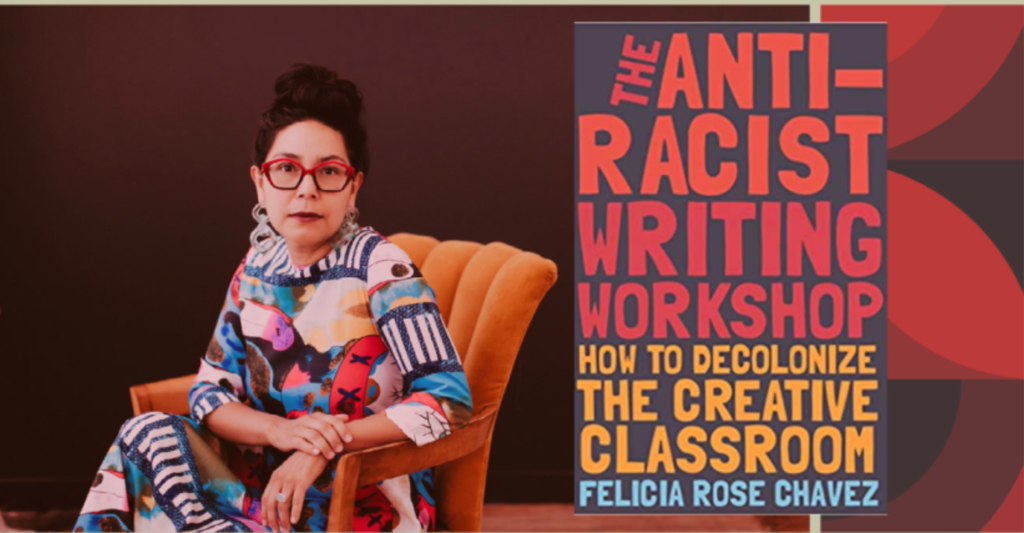
For high school teachers, my team has been reading Felicia Rose Chavez’s book The Anti-Racist Writing Workshop and she’s writing part memoir and part recommendation about what she would like to see changed in writing workshop at secondary and college. She’s writing about her experiences teaching writing at the university, but everything she’s writing about we’ve inherited at the high school level. How can you make the teaching of writing more invitational and more transformative for more young people. It’s really humbling and really beautiful.
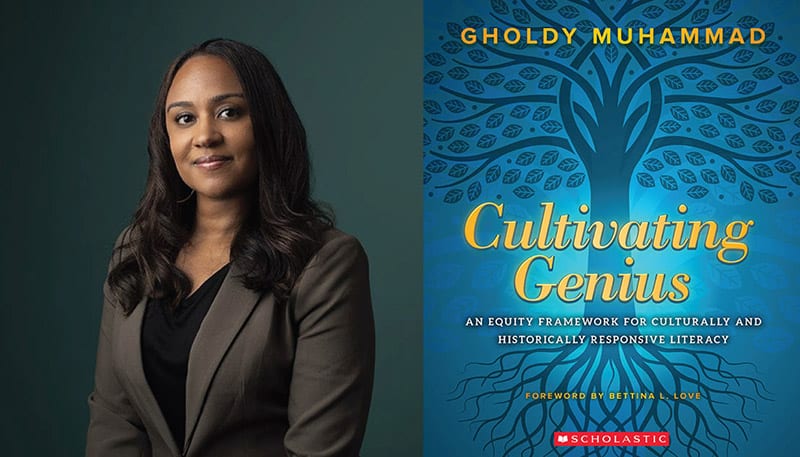
My other recommendation is Gholdy Muhammad’s Cultivating Genius. I was sort of forced to read it twice – the first time I read it, I got everything out of it I was already comfortable with. The second time I read it, I began to realize there were many things that were challenging some of my own teaching norms. She teaches us that every kid has some kind of literary heritage that we should be bringing back into classrooms.
Any final words of advice for teachers, Mary?
Teachers should not be so hard on themselves. Teachers have taught in extraordinarily versatile ways for a year and a half now – and it’s exhausting. There have been moments of real beauty but sometimes they’re hard to see because you have in your mind all the things you used to do. Focus your mind not so much on going back, but on going forward. There are a lot of different ways a classroom can look, and there are a lot of different ways students can learn. Forgive yourself and appreciate these small beauties you have created.